
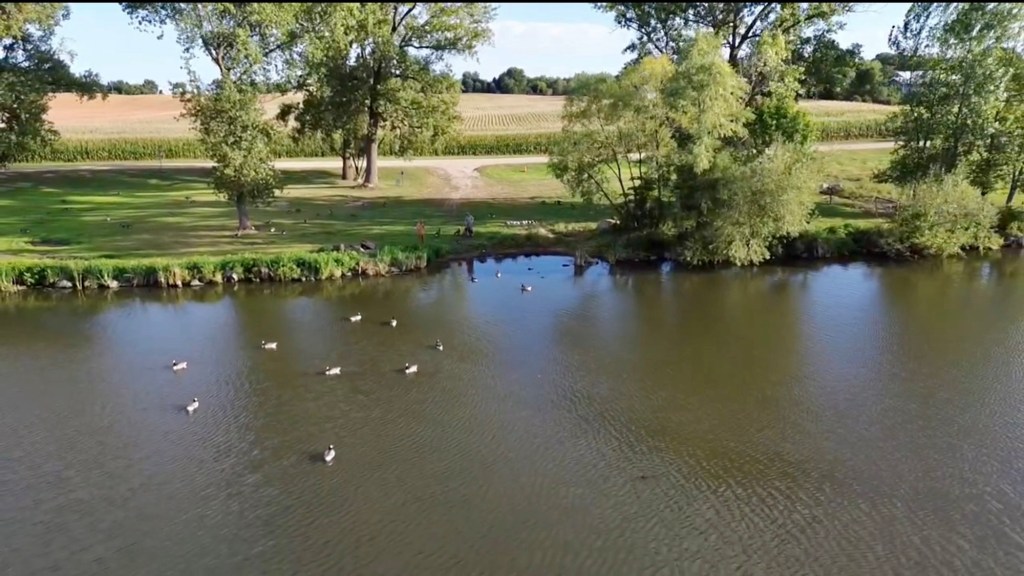
There is a point every September when the geese seem to get smarter overnight.
The first few days of early season can make you feel pretty good about yourself. The birds have spent months largely unmolested, family groups are moving between familiar roosts and feeding areas, and if you find the right field and put a convincing setup in front of them, sometimes everything just works. Then we start shooting at them. A week later, the same flock that sailed into the decoys at 20 yards is suddenly circling at 80, staring at everything like they’ve hired a private investigator.
Welcome to mid-September.
After the last couple weekends we’ve had—especially watching Ember finally put everything together—I’m realizing this might actually be one of my favorite parts of goose season. The birds are still local enough that we can learn their routines, but they’ve had enough hunting pressure that simply being on the X doesn’t guarantee anything anymore.
And that’s when goose hunting gets really interesting.
The natural reaction when birds stop finishing is to start adding things. More decoys. More calling. More flagging. More motion. Move the blinds. Change the hole. Buy another call. Apparently purchase more decoys even though Danielle has made it very clear that we already possess an unreasonable number of fake geese.
I’m starting to think the answer is often the opposite.
Maybe September isn’t about showing them more.
Maybe it’s about giving them fewer reasons to say no.
These Aren’t the Same Geese We Hunted Opening Weekend
By this point in September, our local geese have seen some things.
Some have been hunted directly. Others have watched neighboring family groups get shot at. They’ve seen trucks roll into fields before daylight, watched blinds suddenly appear in places that were empty the evening before, and heard every variation of goose calling we can throw at them. Even birds that haven’t been directly hunted can learn from the pressure happening around them.
That’s part of what makes resident geese interesting to hunt. These birds know their neighborhood. They know the ponds, fields and loafing areas they’ve been using all summer. They know where they normally land and what those places normally look like.
So as the season progresses, I don’t think our biggest challenge is convincing a goose that our decoys look like geese. Modern decoys are incredibly realistic.
The challenge is convincing them that nothing about the situation feels wrong.
That’s a much different problem.
It means scouting becomes more important. Concealment becomes more important. Calling decisions become more important. Even little things that we might get away with during the first few days of the season start mattering.
And it’s why I’m becoming more interested in making our spreads look like something the birds actually expect to see instead of simply putting out as many decoys as possible.
I Want the Spread to Tell a Story
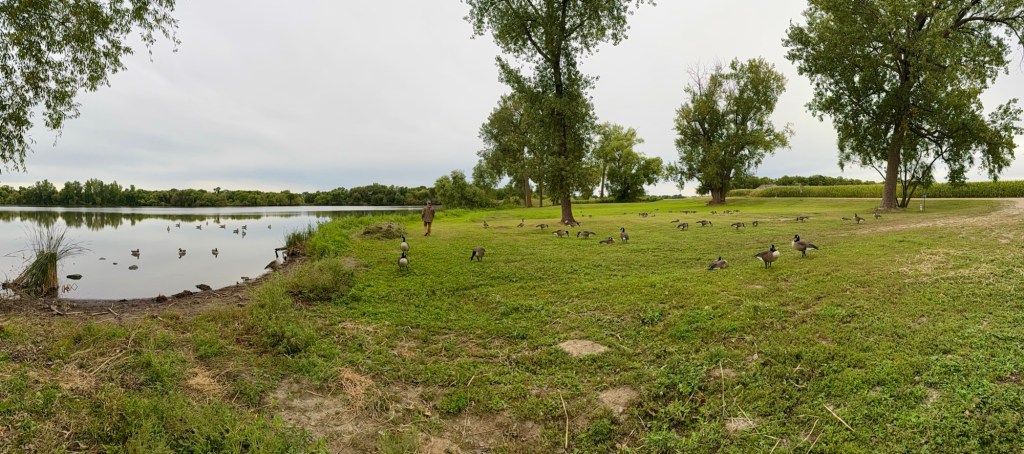
We spent a lot of this summer building our goose spread, and one of the things I’ve become fascinated with is posture.
We’ve got feeders, resters, sleepers and uprights. We’ve got the larger DSD Giants and the Maximas, which gives us a lot of flexibility in how we build groups. Originally, I looked at that primarily from an inventory standpoint. We have this many feeders, this many sleepers, this many resters.
Now I’m trying to look at those decoys differently.
They’re body language.
If I watch a real group of geese feeding, they’re rarely all doing exactly the same thing. Some are feeding hard. Others are resting. A couple might be walking. There’s usually a bird or two standing more upright and paying attention to what’s happening around the group.
That should influence how we set decoys.
If we’re trying to imitate a relaxed family group that has been comfortably feeding in a field, I want the spread to look relaxed. Maybe most of the birds are feeding, but there are a couple resters mixed in. Maybe an upright bird sits toward the outside of the group. Instead of evenly spacing everything because it looks pretty from the blind, I want little groups that look natural from the air.
The question I’m asking more often is simple: What are these decoys telling an approaching goose?
Do they look like birds that just landed and are aggressively feeding? Do they look like birds that have been there for an hour and are completely comfortable? Does the entire group look relaxed, or did we accidentally create a spread where half the geese appear to be on high alert?
I don’t think there’s one perfect answer. That’s the fun of it.
But I do think posture is one of those details that becomes increasingly valuable as the same local geese see more and more spreads.
I’m Starting to Believe Smaller Can Be Better
This might be the hardest adjustment for me personally because I really like decoys.
Danielle can confirm that.
We’ve spent the summer putting together a spread that gives us an almost ridiculous number of options. Between the new DSDs and everything we’ve accumulated over the years, we can build a pretty substantial goose spread when we want to.
And there absolutely will be situations where I want every bit of that pulling power.
Traffic hunting is the obvious example. If we’re trying to convince birds flying from Point A to Point B to make a detour and investigate us, visibility matters. Later in the season, when we’re dealing with larger groups of geese and migrating birds, there will be times when a bigger spread creates exactly the picture we’re trying to show.
But September locals aren’t necessarily behaving like November migrants.
If I scout a field and watch eight geese feed there every evening, why would I automatically decide the next morning needs 50 decoys?
Maybe eight is the answer.
Maybe ten.
Maybe twelve.
That’s something I want to experiment with a lot this season. I want to see how small we can go while still creating an incredibly believable setup. Not because tiny spreads are magically better, but because I think matching what the birds are actually doing is more important than following a predetermined decoy number.
There are some practical advantages too. Twelve decoys are easier to hide around than 50. They’re faster to set. They’re faster to move. If the birds shift 100 yards from where we expected, relocating a dozen decoys doesn’t require a complete rebuilding of the hunt.
And there’s just something satisfying about finishing geese over a tiny spread.
If we can consistently fool pressured local birds over eight extremely realistic decoys sitting exactly where those birds already want to be, that tells us something.
Location beat volume.
That’s useful information.
Before I Blame the Decoys, I’m Blaming Us
One of the easiest traps in waterfowl hunting is blaming the spread every time birds don’t finish.
I’ve done it plenty.
A flock gets our attention, swings toward the decoys, makes a couple circles and suddenly leaves. Immediately everybody starts looking at the spread.
Maybe we need to move the landing hole.
Maybe that feeder is facing the wrong direction.
Maybe the birds don’t like the flag.
Maybe we need more decoys.
Maybe we need fewer decoys.
All of those things can matter.
But as September progresses, I’m trying to force myself to look at the hunters first.
What could those birds see?
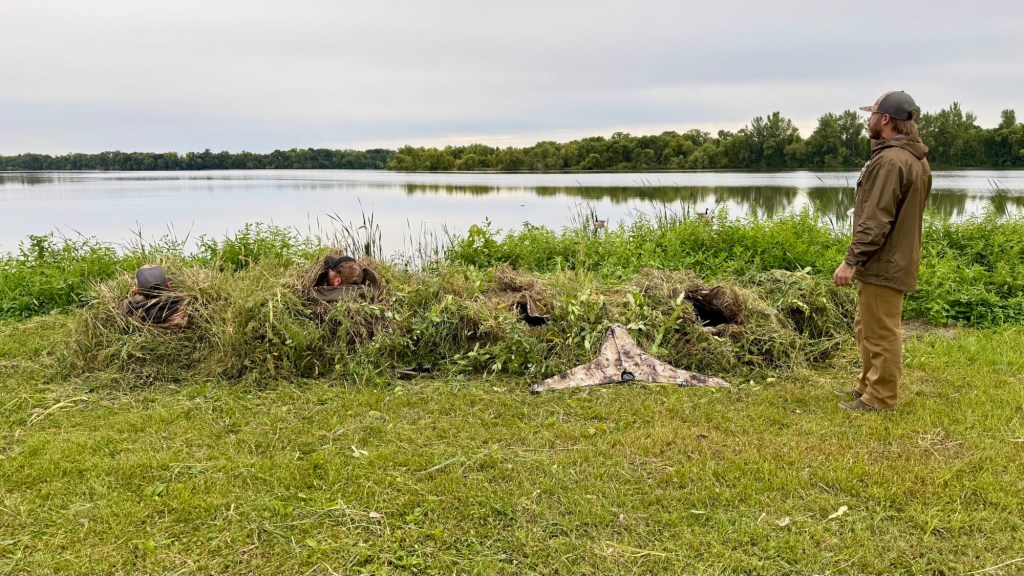
The hide that looked perfect at 5:15 in the morning can look completely different when the sun comes up. A blind brushed with the wrong vegetation suddenly becomes obvious. A shiny face moving in the shadows can be enough. Three hunters trying to watch a flock circle overhead can create a surprising amount of movement.
Then we’ve got Ember.
Last year, Ember’s biggest goose problem was figuring out how she was supposed to carry one.
This year, Ember’s biggest goose problem is apparently accepting that she isn’t personally responsible for retrieving every Canada goose she sees.
That’s a problem I’m very happy to have, but it has forced us to adjust our dog handling.
Now that she’s getting live reps and understands exactly what we’re doing, the excitement level has gone through the roof. She hasn’t necessarily been outright breaking, but those first birds appear and you can almost see the thought go through her head:
Those are Dad’s. I need to get those.
We’ve started using the new Dakota spring-loaded dog blind, and over the last several hunts I’ve already noticed a shift in her composure. It gives her a defined place. She can watch, but she has to wait.
The retrieve itself becomes the reward.
She doesn’t get the bird because she saw it. She gets the bird because she stayed composed, we completed the hunt, and I sent her.
That lesson is important for dog training, but it’s also helping our concealment. A golden head bouncing around the blind isn’t exactly the finishing touch I’m looking for when geese are circling at 50 yards.
Calling Is Becoming More of a Conversation
Calling is another area where I’m trying to become more disciplined.
I love calling geese. When a flock answers and starts sliding toward the spread, it’s one of the coolest interactions in waterfowl hunting.
But sometimes I think we continue calling because we like calling, not because the geese need to hear it.
The first flock of the morning can tell us a lot if we’re willing to listen.
Maybe I hit them hard and they immediately turn toward us. Great. Now what happens when I keep calling? Do they keep responding? Do they start drifting? Do they get more comfortable when everything quiets down? Do they only need a few soft clucks and moans when they’re finishing?
That’s one thing I’ve really liked about the Northline Southbound this year. It gives me that low-end, goosey sound I’ve been looking for, but I can also get extremely quiet with it. I don’t have to scream at every flock simply because the call is capable of making noise.
Some birds need to be convinced.
Others already want to be there.
Those birds might only need reassurance.
The more pressure our local geese see, the more I want calling to become responsive instead of predetermined. I’m not deciding before daylight that we’re going to call aggressively all morning.
The birds get to decide that.
We’re Scouting Hunters Almost as Much as Geese
The other thing that changes this time of year is scouting.
Early in the season, it’s easy to think scouting simply means finding geese.
Find birds. Figure out where they’re feeding. Get permission. Hunt them.
Now I want more information than that.
I want to know what pressure those birds have experienced.
Are there trucks around that area every morning? Has the field already been hunted? Are birds leaving the roost differently than they were a week ago? Are they suddenly feeding later? Are they flying higher? Have they moved into smaller fields or weird little places that don’t immediately scream “goose field”?
Pressure doesn’t just make birds smarter in some vague sense.
It changes behavior.
If geese that normally leave the roost immediately after sunrise suddenly sit there for another hour, that’s information. If they climb straight to altitude before leaving instead of making a low flight to the neighboring field, that’s information. If a group that had been using a large obvious field suddenly shifts to a little grass field nobody is paying attention to, that’s information too.
That’s where I want our scouting to improve.
Finding birds gives us a pin.
Understanding their routine gives us a hunt plan.
There’s a huge difference.
This Fall’s Water Conditions Make Scouting Even More Important
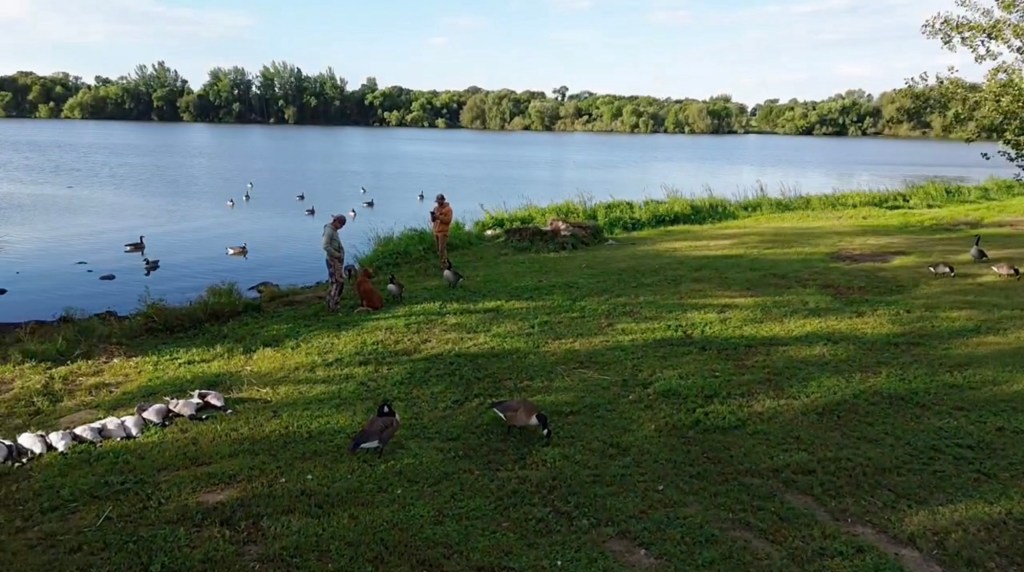
We’re also dealing with another variable this year: low water.
Minnesota has been dealing with widespread drought conditions, and the DNR has already warned boaters and hunters that low water can change access and expose rocks, stumps, holes and sandbars that normally aren’t an issue.
For waterfowl hunters, that matters for more than launching a boat.
Water levels change habitat.
A pond that was perfect last year might barely have enough water this fall. Another marsh might suddenly have exactly the shallow water and exposed food ducks want. Traditional loafing areas for geese can change. Access routes can change. Places we normally wouldn’t consider might become surprisingly attractive.
That’s why I’m trying really hard not to hunt last year’s map.
Satellite imagery is useful. Past experience is useful. Pins from previous seasons are useful.
None of them tell us exactly what the marsh looks like today.
We still have to go look.
That’s especially important with the regular duck opener getting closer. Every scouting trip we’re making now isn’t just about finding an early-season goose hunt. We’re also learning what the landscape looks like before duck season really gets rolling.
Sometimes the Best Hunt Is the One We Don’t Take
This might be the hardest lesson for me.
Finding geese doesn’t automatically mean we need to hunt them.
Ember strongly disagrees with this philosophy.
She believes every goose should immediately become an Ember-related activity.
But if we find a small group using an excellent location consistently, sometimes leaving those birds alone might give us a better hunt later.
Maybe the wind isn’t right.
Maybe there’s no good hide.
Maybe they’ve already been pressured.
Maybe they’re using the field inconsistently and we need another evening of scouting before making a decision.
A bad hunt doesn’t only mean we don’t kill geese. Sometimes it means we educate the exact birds we wanted to hunt again.
I’ve definitely been guilty of forcing hunts because I found birds and got excited.
I’m trying to get better at waiting.
I’d rather hunt a good group once under the right conditions than hunt them three times poorly and slowly push them out of the area.
That requires discipline, especially during a season that already feels way too short.
But I think it’s going to pay off.
The Goal Isn’t More Gear. It’s Better Decisions.
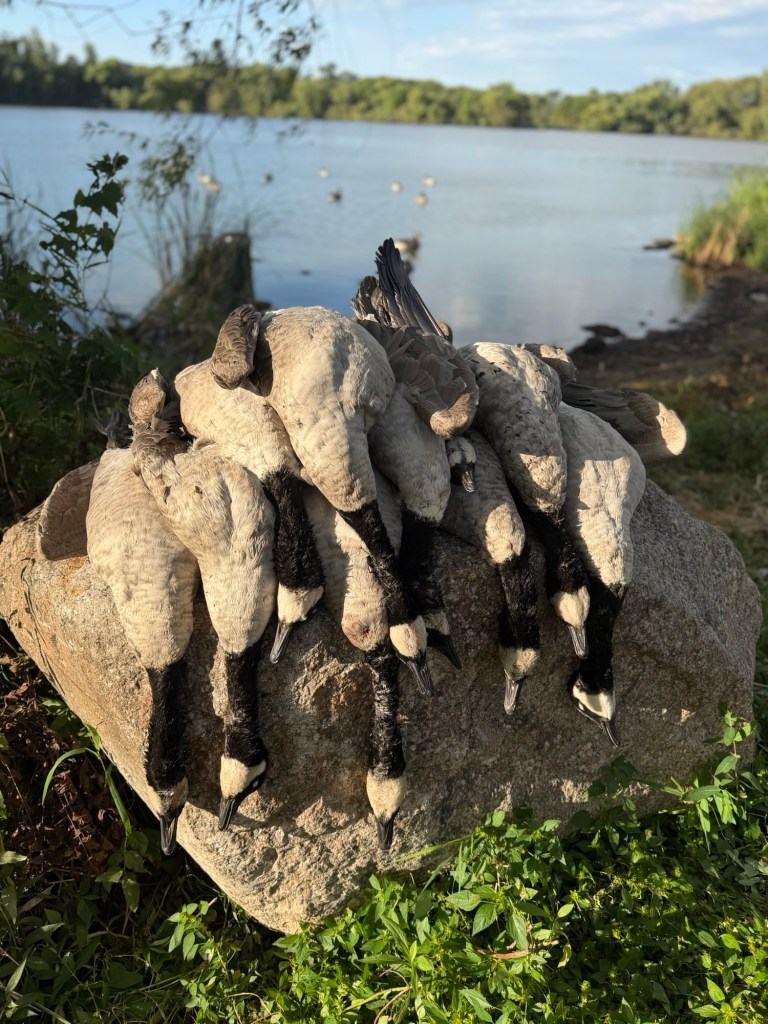
That’s really what mid-September is becoming for me.
We’ve got the equipment.
Believe me.
We’ve got the decoys.
Danielle definitely knows we’ve got the decoys.
What I’m trying to build now is the discipline to use everything intentionally.
There will be mornings when I want 40-plus premium decoys creating a huge visual target in a traffic field. There will be mornings when I want eight geese sitting exactly where the real birds sat the evening before. Sometimes I’m going to call aggressively. Sometimes I’m going to shut up. Sometimes the flag might be the thing that turns a distant flock. Other times I want the entire setup completely still.
And sometimes we’re going to find birds, watch them, and drive home without hunting them at all.
That’s what keeps waterfowl hunting interesting.
The more I do this, the less I believe there’s one perfect decoy spread, one perfect call sequence or one perfect way to hunt geese.
Instead, we’re building a toolbox.
The birds tell us which tool we need.
Early goose season is winding down, and regular duck season is getting close. The easy September geese have already started getting their education, which means we’re going to have to keep getting better too.
We’re going to experiment with smaller spreads. We’re going to pay more attention to posture. We’re going to keep working on Ember’s steadiness now that she’s decided goose retrieving is the greatest job on earth. We’re going to watch how birds respond to calling instead of trying to force them into our plan. And we’re going to keep scouting—not just looking for geese, but trying to understand why they’re where they are.
Because that’s the part of waterfowl hunting I can’t get enough of.
You can spend all summer planning exactly how you think it’s going to work.
Then September arrives.
The birds get a vote.
And suddenly we’re learning all over again.
– Max & Danielle
Burley Outdoors
 Burley Outdoors
Leave a comment