
There comes a point before every duck opener where preparation changes.
A month ago, there was still time to order something we forgot, rebuild a piece of equipment, completely reorganize the trailer for the third time, or convince ourselves that one more dozen decoys would finally solve all of our problems. Now we’re four days out from Minnesota’s regular duck opener on Saturday, September 26.
The buying is basically done. The building is done. The experimenting is mostly done.
At this point, Danielle and I aren’t trying to reinvent anything. We’re watching.
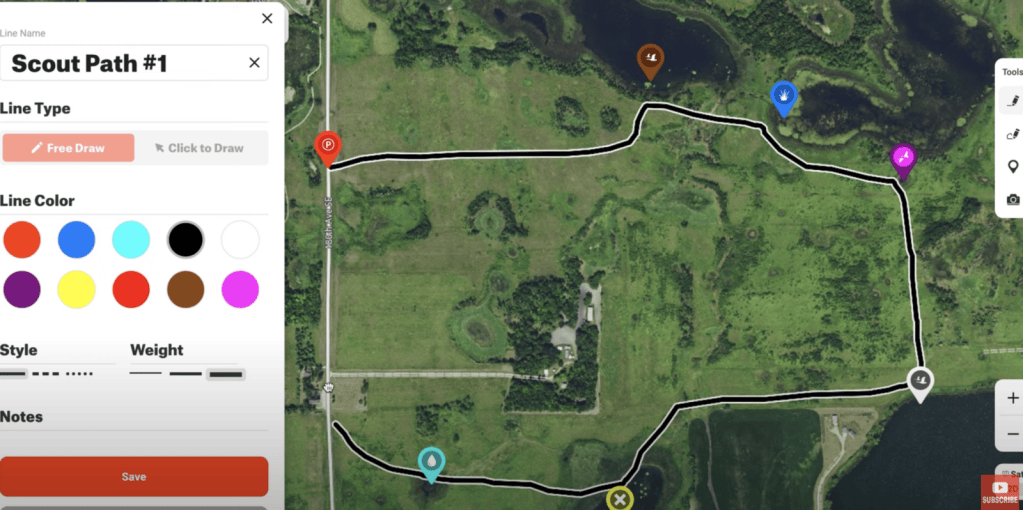
We’re watching the weather, the water, the birds and the pressure. I’m looking at maps more than is probably healthy. Every time we drive somewhere, I’m looking at ponds and fields instead of the road scenery. Ember knows something is happening because hunting gear keeps moving around the house and trailer, and she’s reached the point where she recognizes exactly what certain bags, blinds and guns mean.
This might actually be the most important part of opening-week preparation.
Stop trying to add things.
Start paying attention.
There Are Reasons to Be Optimistic This Fall
There’s some encouraging news heading into Minnesota’s opener. The DNR’s spring survey estimated about 677,868 breeding ducks in the state, excluding diving ducks. That’s 62% higher than the 2025 estimate and 11% above the long-term average dating back to 1968. Timely April rain appears to have helped create better settling conditions for breeding ducks.
That’s great to hear.
It also doesn’t mean I’m expecting ducks to rain out of the sky Saturday morning.
A statewide breeding estimate and what happens over one particular decoy spread in southern Minnesota in late September are two completely different things. Local production matters. Habitat matters. Hunting pressure matters. Weather matters. And sometimes you can do everything right and the ducks simply aren’t where you thought they would be.
That’s why I’m much more interested this week in what I’m actually seeing than what a number tells me I should see.
The survey gives us a reason to be optimistic about the broader picture.
Scouting tells us where to be Saturday morning.
And the closer we get to opener, the more important fresh information becomes.
I’m Trying to Scout Patterns Instead of Collecting Pins
I’ve been thinking a lot about scouting lately because waterfowl scouting can feel incredibly inefficient.
You can drive around for hours and see almost nothing. Cattails hide entire ponds. Tall grass blocks shorelines. Ducks can disappear into tiny pockets that are practically invisible from the road. You can drive past a wetland at 3:00 in the afternoon and see nothing, then somebody else happens to drive past at 6:45 and there are birds everywhere.
It can feel like luck.
Some of it probably is.
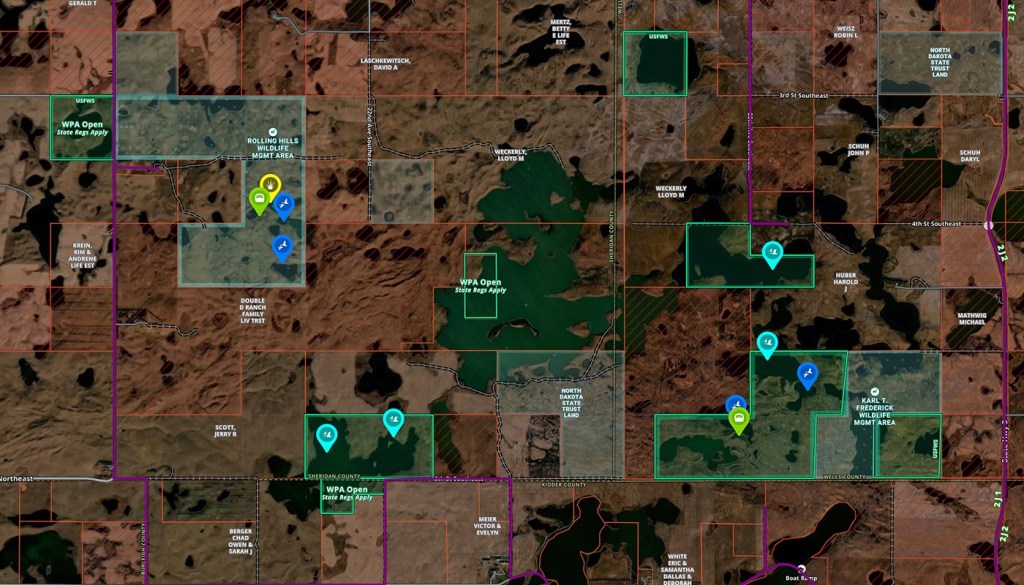
But I’m trying to stop treating scouting as a search for a magic pin and start treating it as collecting little pieces of information about how birds are using an area.
Seeing 40 ducks somewhere Tuesday evening is useful, but I want to know more than that. Why are they there? Is it food? Is it a loafing area? Are they protected from the wind? Are they using shallow water that gives them access to something they want to eat? Did they spend the entire day there, or did they just arrive? Which direction did they come from? Where do they go when they leave?
Then comes the question that matters more than almost everything else:
Can we actually hunt them?
I’ve found birds plenty of times in places that looked exciting through binoculars and terrible once I started thinking about the actual hunt. Maybe there’s no concealment. Maybe access requires walking directly through the birds. Maybe the wind makes the spot almost impossible to hunt. Maybe getting Ember to a cripple would be a nightmare. Maybe the only way to set up would blow every duck off the water before we ever put out a decoy.
Seeing ducks isn’t enough.
What I’m looking for now is a huntable pattern.
That’s different.
Water Might Tell Us More Than the Ducks Do
I’m also paying a lot of attention to water this week.
One of the mistakes I think waterfowl hunters can make—and I’ve definitely done it—is assuming a familiar marsh is still the same marsh.
You remember exactly where you ran the boat last year. You remember where you walked. You remember the pocket where ducks wanted to land. You remember a little patch of vegetation where the blind disappeared perfectly.
Then you come back twelve months later and everything has changed.
Water moves. Vegetation changes. Food changes. Shorelines change.
And ducks respond to all of it.
The Minnesota DNR has specifically warned hunters about changing water conditions in some areas this season. Marsh Lake is an especially dramatic example, where a roughly two-foot drawdown helped produce fresh growth including smartweed, chufa and bulrush. That habitat response can be excellent for waterfowl, but the lower water also creates different access, mud, submerged obstacles and concealment challenges for hunters.
That specific project isn’t determining where we’re hunting Saturday, but the lesson absolutely applies.
Don’t hunt last year’s map.
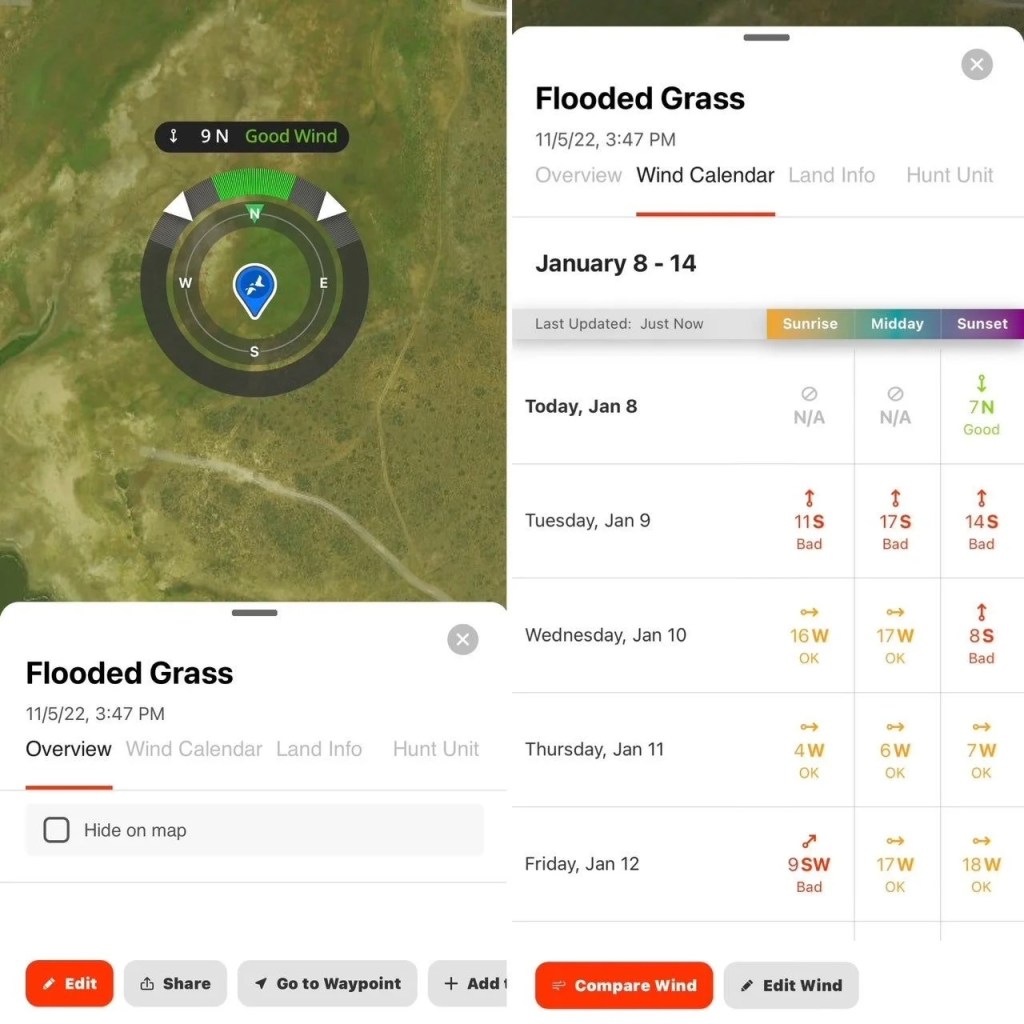
I’m interested in shallow water with good vegetation nearby. I’m looking for newly exposed areas. I’m looking at little protected pockets where ducks can get out of the wind. I’m looking for places that give birds food, security and enough water to feel comfortable.
I’m also looking at those spots from our perspective.
Can we get there safely in the dark? Can we hide? Can Ember work? What happens if the wind changes?
Those questions are becoming more useful to me than simply looking for the biggest blue area on a map.
We’re Scouting Hunters Too
Opening weekend is different from almost every other weekend of duck season because we’re not only patterning ducks.
We’re patterning hunters.
A beautiful public marsh holding birds Tuesday evening might have six trucks sitting at the access Saturday morning. That’s part of public-land hunting. Nobody owns the spot, and if somebody beats us there, they beat us there.
So while I’m scouting this week, I’m paying attention to vehicles too.
If I see the same truck glassing a marsh multiple evenings, I’m going to assume that hunter probably has plans similar to mine. If an access suddenly has vehicles around it every night before opener, that’s information. It doesn’t automatically mean we’re abandoning the spot, but it absolutely goes into the calculation.
That’s why I want multiple plans.
Not just multiple pins.
There’s a difference.
I want to know what Plan B actually looks like. I want to know how we’re getting in, where we can hide, what wind makes it work and where the birds have been using it.
If somebody is sitting at Plan A when we arrive Saturday morning, I don’t want our next conversation to be, “Well…now what?”
I want to start driving toward something we’ve already thought through.
Opening morning has enough variables without improvising the entire hunt in the dark.
Once We Find Birds, Sometimes We Need to Leave Them Alone
This is probably one of the hardest things for me because once I find birds, I want more information.
I want to know exactly how many are there. I want to know what species. I want to know exactly where they’re sitting. I want to know where they’re entering and leaving. I want to know whether they’re still there tomorrow.
Eventually, gathering more information starts doing more harm than good.
If I’ve found birds using a small pothole, I’m not walking to the shoreline every evening just to confirm they’re still there.
Every intrusion matters, especially on small water.
Sometimes the best scouting decision is getting enough information and then backing out.
Glass from a distance where you legally can. Use terrain. Watch from somewhere that doesn’t announce your presence to every duck on the wetland. Figure out the broad pattern without forcing the birds to react to you.
I’d rather go into Saturday morning with 80% of the information and undisturbed birds than have 100% of the information about ducks I bumped Thursday night.
That’s something I’m trying to get better at.
More information isn’t always better information.
I’m Keeping the Spread Simple Until the Birds Tell Us Otherwise
We’ve got plenty of decoys.
I don’t feel any need to prove it Saturday.
The more I hunt, the more I like starting simple and letting the birds tell us whether something needs to change.
If we’re scouting ducks that are sitting in little family groups, I want the spread to reflect that. A few believable groups with some separation between them can look incredibly natural. Give them an obvious place to land, use the wind correctly, create some water movement and then stop touching everything.
That’s difficult for me.
Waterfowl hunters love adjusting decoys.
A flock swings once and leaves and immediately we’re moving the entire spread.
Maybe the spread was wrong.
Maybe those ducks were going somewhere else.
Maybe they saw us.
Maybe another hunter shot at them five minutes earlier.
Maybe they’re ducks and ducks occasionally do things that make absolutely no sense.
One flock doesn’t tell me enough to completely change the plan.
But if four or five flocks all do the same thing, now we have information.
That’s when I’m willing to adjust.
Maybe they’re consistently sliding to one side of the spread. Maybe they’re trying to land outside the hole. Maybe they’re avoiding a particular piece of motion. Maybe they’re getting to the same distance and flaring.
Look for the pattern.
Then make the change.
If Birds Aren’t Finishing, I’m Looking at Us First
This is probably the biggest tactical thing I’m carrying into opener.
We spend so much time talking about decoys, calling and motion because those things are fun.
Concealment isn’t nearly as exciting.
But if birds are consistently getting to 60 yards, looking at everything and leaving, I’m checking the hide before I start rearranging the spread.
Opening-day ducks might not have experienced an entire season of hunting pressure yet, but they still have eyes. They know what a shoreline is supposed to look like. They understand that a giant unnatural pile of vegetation with four faces sticking out of it wasn’t there yesterday.
I’m looking at everything.
Is somebody’s face glowing? Is a gun barrel moving? Does the blind actually match the vegetation around it? Is Ember’s dog blind sticking out? Is the boat hidden well enough? Are we silhouetted against the sky?
Most importantly, are we moving?
That’s the one that gets hunters.
Everybody wants to watch the ducks.
A flock starts circling and suddenly four heads are tracking it around the marsh.
Sometimes the best thing we can do is stop moving and trust whoever is watching the birds to tell everybody else what’s happening.
The decoys can be perfect.
If the birds see us, none of it matters.
Ember’s Biggest Challenge Has Completely Changed
I’m probably more excited about hunting ducks with Ember this year than almost anything else.
Last season, we were trying to build confidence. She was figuring out what hunting actually meant. She was learning that a bird falling from the sky was something she was supposed to go get.
Now we have the opposite problem.
She knows.
She really knows.
Early goose season flipped a switch in her. Watching her make 11 successful Canada goose retrieves over one weekend was one of those moments where all the training suddenly felt worth it.
The little golden that once stood over a Canada goose wondering how in the world she was supposed to carry it now thinks every goose in Minnesota is her personal responsibility.
That’s awesome.
It’s also created our next training challenge.
Patience.
Opening morning is going to be different from the goose hunts we’ve been doing. There could be shooting around us. Birds might land in the decoys. Cripples could swim through vegetation. Another flock could appear while she’s staring at a dead duck floating 30 yards away.
Her job isn’t simply to retrieve ducks anymore.
Her job is to retrieve ducks when she’s sent.
That’s a huge difference.
So this week I’m not trying to wear her out throwing endless bumpers. She knows how to retrieve. We’re doing short, clean obedience work. Place. Stay. Release. A couple retrieves. Finish while everything is still sharp.
I want her excited Saturday morning.
I just also want her brain attached to her ears.
We’ll see which version shows up.
Identification Matters More Than Ever Early in the Season
There’s another opening-week detail that’s easy to overlook while we’re thinking about scouting and decoy spreads.
Know what you’re shooting.
Early-season ducks aren’t always dressed like the beautiful drakes we see in photographs. Eclipse plumage and immature birds can make identification much more difficult, especially during those first minutes of legal shooting light.
If you’re unsure, don’t shoot.
There will be another duck.
It’s worth spending a little time this week refreshing identification, especially on species you don’t see regularly. Look at more than color. Body shape, wingbeat, flock behavior, size and vocalizations can all help.
It’s also worth reviewing the current regulations instead of relying on what you remember from last season. Minnesota’s regular season opens one-half hour before sunrise September 26, and season structures vary by zone.
The has the current season information.
That’s a five-minute job we can handle now instead of trying to remember a species limit while ducks are circling.
The Bigger Picture Is Worth Remembering Too
One waterfowl conversation I’ve been following this year is Minnesota’s discussion around an optional three-duck limit. The DNR sought public input on a potential future framework that could give hunters a choice between the traditional six-duck limit with species-specific restrictions and a simpler three-duck daily limit allowing any species or sex. Similar concepts have been evaluated in Nebraska and South Dakota, in part to study whether simpler regulations could make duck hunting less intimidating for newer hunters.
Whatever eventually happens with that idea, I think the conversation itself is interesting.
Duck hunting does have a learning curve.
Species identification. Regulations. Boats. Decoys. Calling. Dogs. Scouting. Access.
Then we waterfowl hunters occasionally wonder why someone new looks at all of that and doesn’t immediately decide this seems like the easiest hobby in the world to start.
We don’t need to wait for regulations to make waterfowl hunting more approachable.
Take somebody.
Explain why you’re setting the decoys where you are. Teach identification. Let them call. Let them make mistakes.
We all did.
The complexity is part of what makes waterfowl hunting interesting, but it shouldn’t become a wall that keeps new people from experiencing it.
By Friday Night, I Want to Be Done
That’s my goal.
Friday night should be boring.
I don’t want to be rebuilding something in the garage at 10:30. I don’t want to be searching for dog equipment. I don’t want to discover a dead battery. I don’t want to realize the shells are in another truck.
The boat should be loaded. Batteries charged. Dog gear packed. Guns ready. Licenses handled. Decoys selected. Clothes laid out. Coffee ready.
Plan A.
Plan B.
Plan C.
Then go to bed.
Because eventually you’ve done everything you can do.
Opening morning is going to happen whether we’re perfectly prepared or not.
There will probably be another truck somewhere I hoped there wouldn’t be. Something won’t work exactly the way I expected. The wind won’t do precisely what the forecast says. A flock will completely ignore us. Ember will probably do something that makes me incredibly proud and something else that reminds me she’s still a two-and-a-half-year-old golden retriever.
Danielle will probably remind me that whatever minor disaster I’m currently treating like an international crisis isn’t actually that important.
Then the sky will start getting lighter.
We’ll hear wings somewhere we can’t see.
Somebody will quietly say, “Ducks.”
And everything we’ve been doing since last season will suddenly come down to the next 30 seconds.
That’s why we do all of this ridiculous preparation.
Not because opening morning needs to be perfect.
Because every once in a while, the scouting is right. The wind is right. The hide disappears. Ember stays steady. A flock makes one turn over the spread.
Then another.
Their wings cup.
Their feet drop.
And for a few seconds, the entire plan works exactly the way you drew it up.
Four more days.
Duck season is almost here.
– Max & Danielle
Burley Outdoors
 Burley Outdoors
Leave a comment