
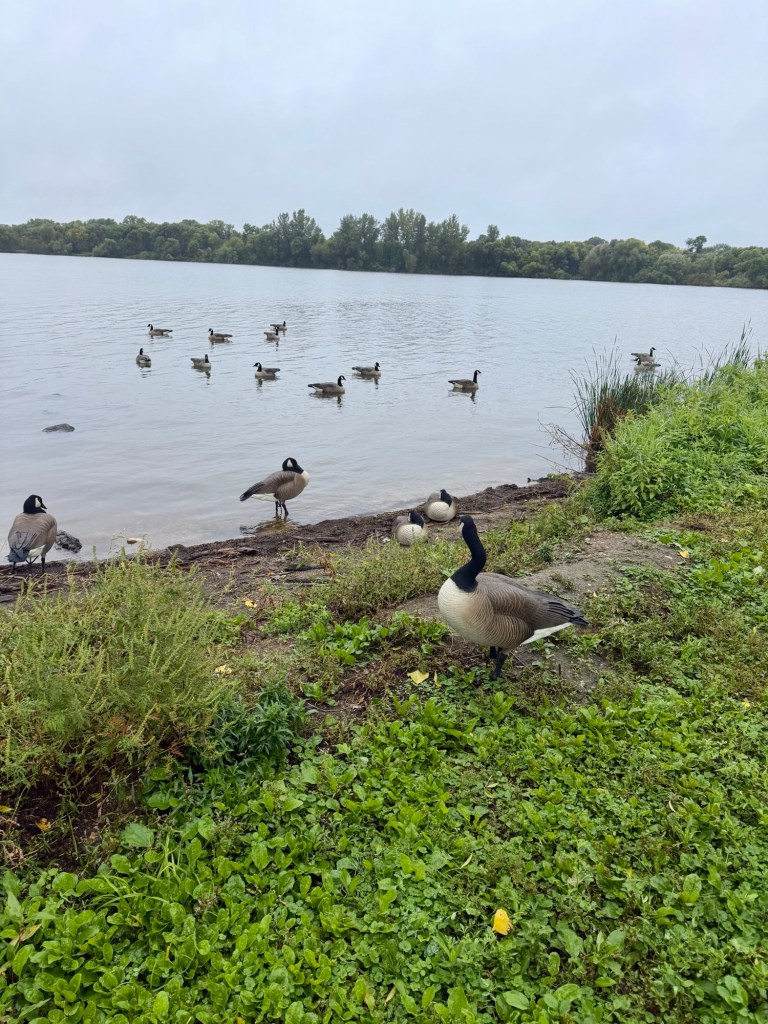
There’s a point in waterfowl hunting where having more decoys starts to feel like the answer to everything.
Birds aren’t finishing? Add more decoys. Hunting traffic? Bigger spread. Educated birds? Give them something they can’t ignore. New decoys come out that look better than what you already own? Obviously those need to find their way into the trailer too.
I’m as guilty of it as anybody.
We own plenty of decoys. More than enough, actually. We’ve built spreads for fields, water, ice, geese, ducks and just about every situation between them. I love messing with spreads, experimenting with different postures and trying to figure out what makes birds react.
But lately I’ve been getting more interested in almost the exact opposite approach.
What if we only put out what we actually need?
Not a small spread because it’s easier. Not because we don’t own more decoys. A deliberately small spread built around the most realistic decoys we have, placed exactly where real birds would naturally sit, with every single decoy serving a purpose.
No filler.
No arbitrary “J-hook” because that’s what the diagram says.
No four dozen decoys evenly spaced across a field because we brought four dozen decoys.
Just a handful of extremely realistic birds telling a believable story.
The farther we get into this season, the more I think there are situations where that might be one of the deadliest spreads we can hunt.
Stop Building a Spread and Start Recreating What You Saw
This is probably the biggest change in how I’ve been thinking about decoys.
For years, waterfowl hunters have talked about spread shapes. U-shapes, J-hooks, Xs, family groups, landing holes and dozens of other variations. Those concepts aren’t useless. Understanding wind and giving birds a place to finish absolutely matters.
But real ducks and geese don’t know what a J-hook is.
They land where they want to be and position themselves according to food, wind, security, other birds and whatever they’re doing at that moment.
That’s what I’m trying to copy.
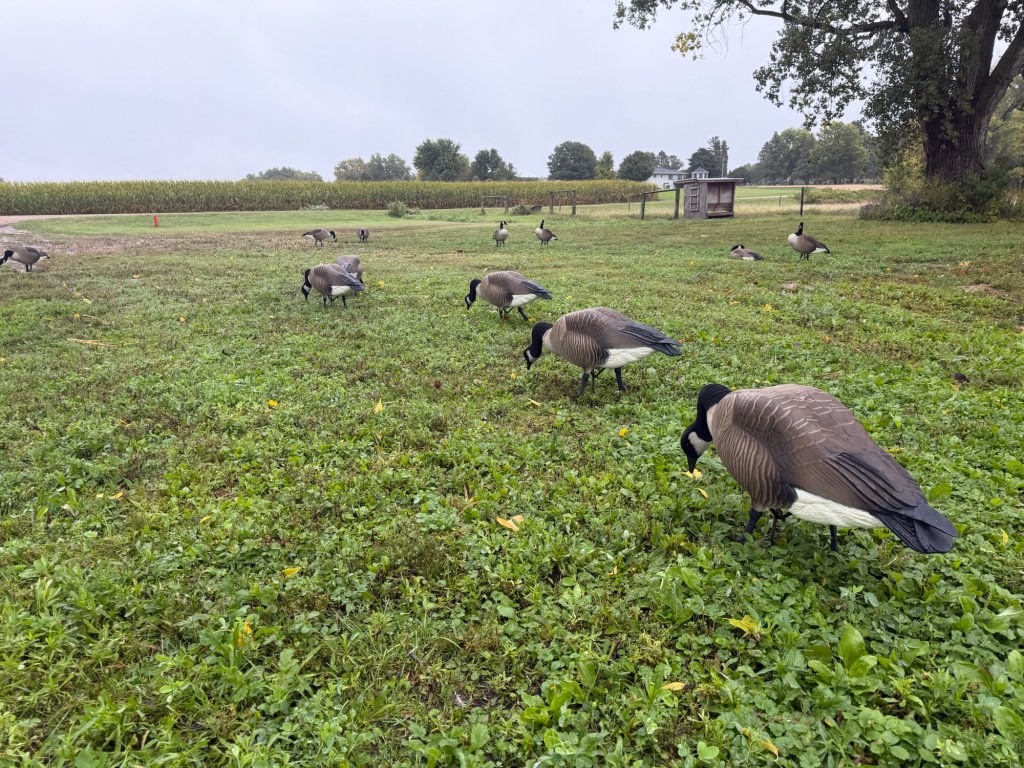
If we’re scouting a little loaf and there are nine geese standing on a mowed grass edge with another six sitting near the water, why would I automatically put 50 decoys there?
The real birds already showed us the spread.
Nine standing here.
Six loafing there.
Open water in front of them.
That’s the blueprint.
One thing I’m trying to pay more attention to while scouting is not just where the birds are, but how they’re arranged when they’re comfortable. Are they packed together? Spread apart? Mostly feeding? Mostly resting? Is one bird standing away from the group looking around? Are they right against the shoreline or several yards off it?
Those details can tell us more about building a convincing spread than almost anything we can draw on paper.
Instead of arriving and building what we think looks good, recreate what already fooled the real birds.
Realism Matters More When There Are Fewer Decoys
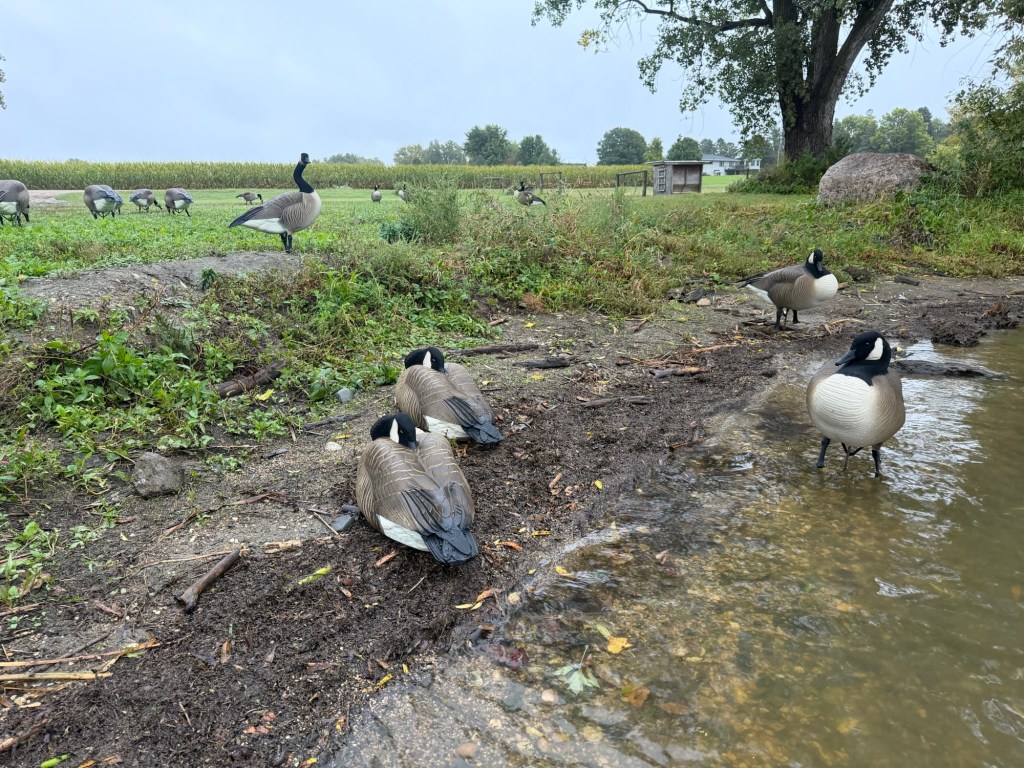
A small spread doesn’t hide anything.
Put 60 decoys in a field and an individual decoy becomes part of the overall picture. Put six or eight decoys on a little grass point and suddenly every one of those birds matters.
That’s where premium realistic decoys start making a lot of sense to me.
We’ve invested pretty heavily in Dave Smith Decoys, and this is exactly the kind of hunting where I think they become especially interesting. I’m not trying to turn this into an advertisement for one particular decoy company. There are several extremely realistic decoys available today. But the entire reason I’ve been building our DSD spread is because I wanted something that could stand up to birds getting close.
Really close.
If I’m going to hunt 60 yards from a flight line and try to pull traffic, numbers might become more important.
If I’m setting up exactly where 12 geese wanted to stand yesterday, I don’t necessarily need 50 fake geese to convince them that 12 fake geese are real.
I need those 12 to look right.
That’s an entirely different job.
It’s also where little details like flocking, natural paint, body shape and especially posture start becoming more valuable. At 200 yards, birds see a group. As they get closer, they’re looking at individual birds.
And if the goal is feet-down birds at 15 or 20 yards, eventually those individual decoys need to pass the test.
Posture Might Be More Important Than Quantity
This is probably my favorite part of experimenting with small spreads.
Every decoy can have a job.
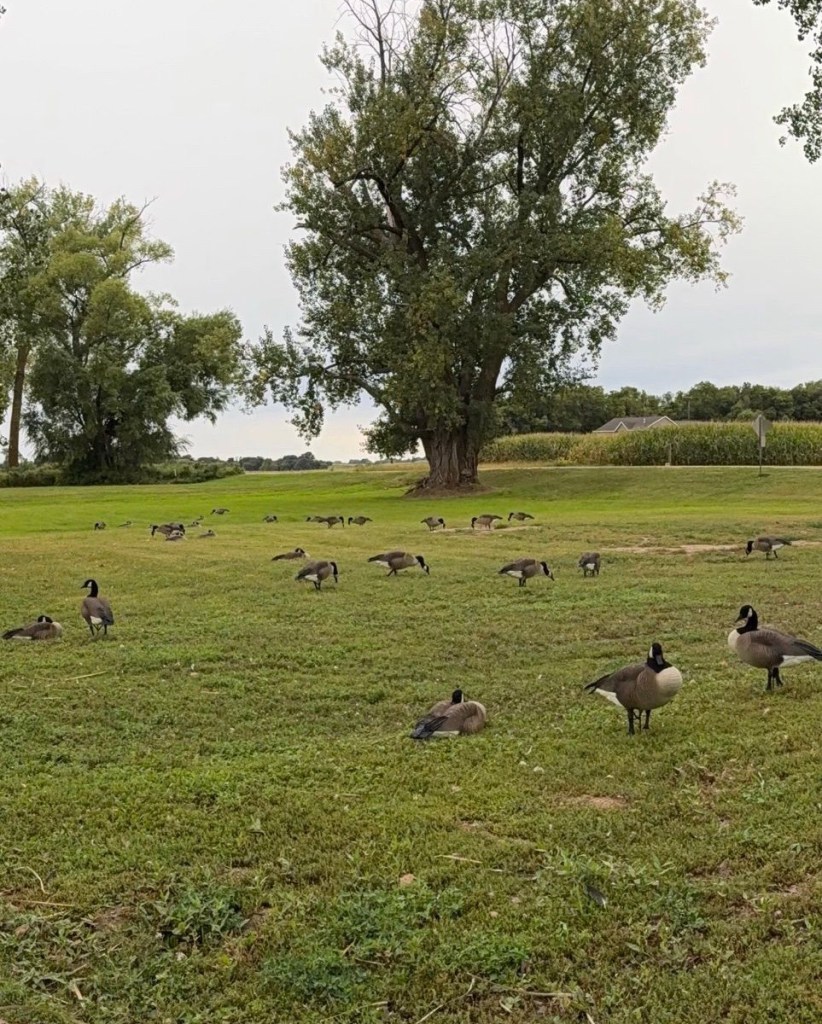
A spread of 50 decoys can have some randomness built into it. With eight or ten, I want to think about what each bird is communicating.
Feeders say something.
Resters say something.
Sleepers say something.
An upright or alert bird says something completely different.
If I’m recreating a relaxed loaf, I don’t want every bird standing upright looking like something just walked into the field. I want birds resting. I want sleepers. I might want a couple relaxed feeders. Then one upright bird slightly separated from the group can look completely natural because real geese almost always seem to have somebody keeping an eye on things.
If we’re hunting a feed, that story changes.
Now feeders should dominate. A couple upright birds mixed in can look natural, but the overall posture of the spread should tell incoming geese that the birds on the ground are comfortable and eating.
That’s where I think small spreads become really fun.
You’re not decorating a field with decoys.
You’re building a scene.
There should be a reason each bird is where it is.
Small Doesn’t Mean Perfectly Spaced
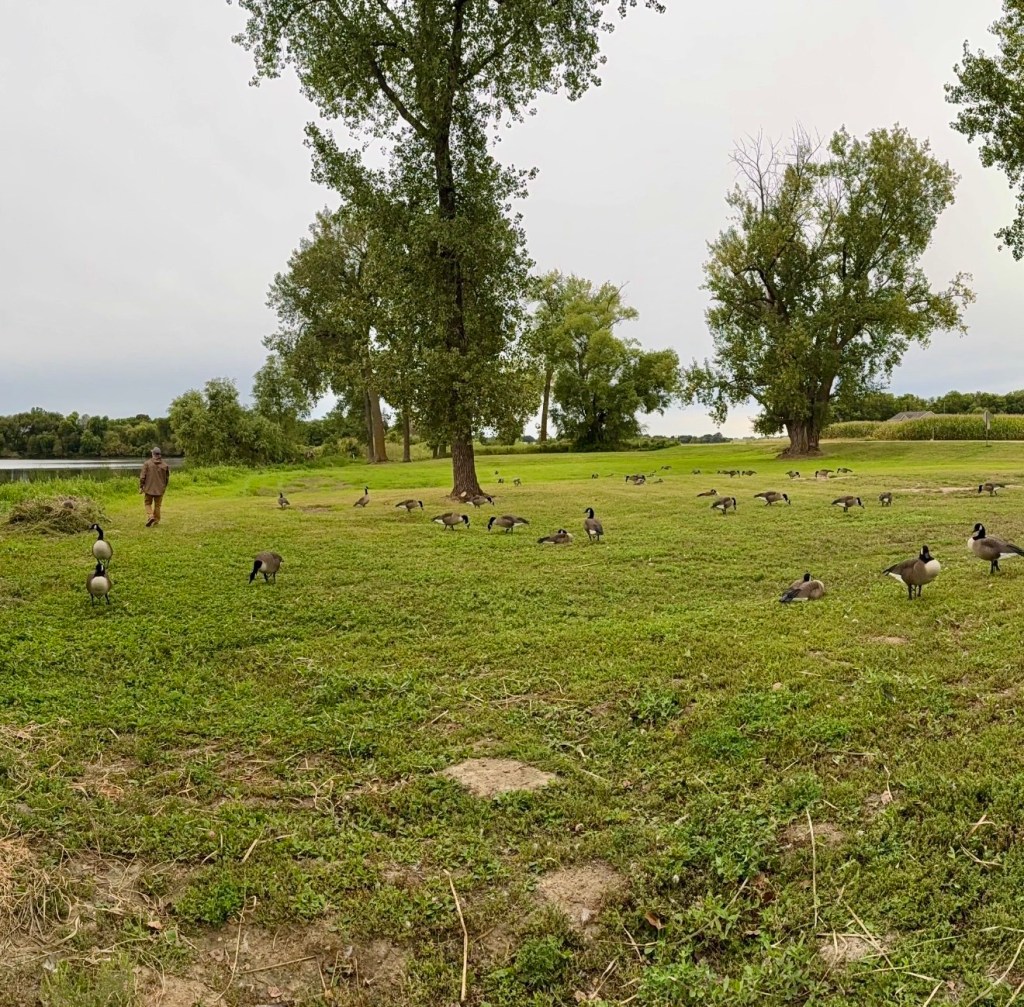
One thing that immediately makes a spread look artificial to me is perfect spacing.
Real birds are messy.
Two geese might practically be standing on top of each other while another bird is 15 yards away. Ducks bunch up. Family groups separate. Feeders wander. Resting birds cluster together.
Yet hunters naturally want to organize things.
We’re carrying decoys out and subconsciously creating equal spacing.
One here.
Ten steps.
Another one.
Ten steps.
Another one.
Before long we’ve built a goose marching band.
I’m trying to intentionally break that habit.
Put three birds tight.
Leave some space.
Put two more together.
Let one stand alone.
Angle bodies differently.
Don’t point every feeder into the wind like they’re magnetized.
The spread should look slightly imperfect because real birds are slightly imperfect.
This matters even more with small numbers because there’s nowhere for unnatural spacing to disappear.
If I’m only hunting eight decoys, I want somebody looking at the setup from 100 yards away to believe eight real birds happened to land there.
Not that somebody carefully deployed eight decoys.
The Hide Becomes Even More Important
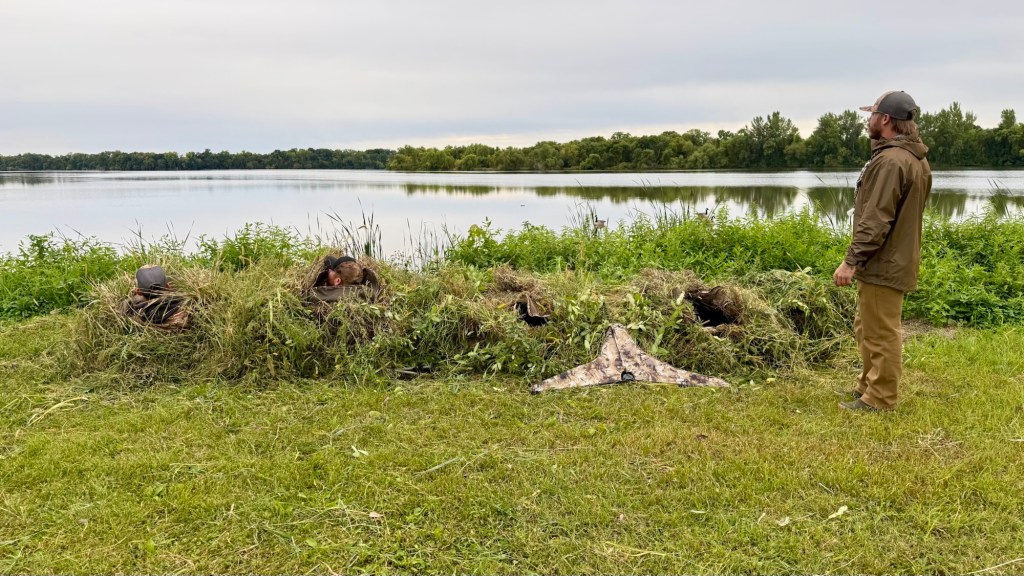
There’s an obvious catch to all of this.
You can build the most realistic eight-decoy spread in Minnesota and ruin the entire illusion with a terrible hide.
Actually, I think small spreads might make concealment even more important.
A giant spread gives incoming birds a lot to look at. A little spread is simple. There isn’t much visual noise.
That means the blind, dog hide and hunters need to disappear.
If we’re using a small spread because we want birds to believe they’ve found a quiet little group of comfortable ducks or geese, a giant suspicious lump 15 yards away destroys the story.
This is why I’m becoming increasingly willing to let concealment dictate the setup.
I’d rather be 10 yards farther from where I think the perfect landing hole should be and completely disappear than force ourselves into the “perfect” position with a mediocre hide.
The birds can move.
Our blind can’t.
Especially when hunting educated birds, I’m starting to believe the hide should often be decided before the decoys.
Find where we can disappear.
Then build the finish around it.
Small Spreads Make Movement More Important
There’s one thing a tiny spread can struggle with.
Life.
Eight completely motionless decoys on a dead-calm morning can look exactly like eight completely motionless decoys.
That’s why movement becomes incredibly valuable.
For ducks, this is where I love a jerk rig. It doesn’t need to turn the marsh into a washing machine. A few ripples moving through an otherwise still spread can make the entire thing look alive.
The same principle applies to geese.
Motion doesn’t necessarily mean motors everywhere. Sometimes it’s simply placing decoys where a little wind can create natural movement or using a flag strategically when birds are far enough away.
But there’s an important distinction.
I want movement that helps birds find us or believe us.
I don’t want movement simply because we own something that moves.
Once birds are close, unnecessary motion can become the thing they inspect.
With a small spread, subtlety fits the entire concept.
Everything should feel natural.
This Is Where the “Weird” Hunts Start Getting Interesting
I’ve talked before about wanting to do more hunts this year that don’t look like traditional waterfowl hunts.
Solo weekday hunts.
Tiny spots.
Midday opportunities.
Little loafs.
Cattle ponds.
Odd grass corners.
Places where dragging an entire trailer worth of equipment into the field makes absolutely no sense.
This style of decoying fits those hunts perfectly.
Imagine walking into a little pond with four extremely realistic goose decoys instead of trying to transport three dozen.
Or slipping into a small duck hole with six floaters and a jerk rig.
Or finding a grass point where geese naturally loaf and recreating the exact group you watched there the previous afternoon.
That’s hunting differently.
And honestly, that’s the stuff I’m becoming most excited about.
There will always be situations where I want numbers. If we’re trying to traffic geese from a distance, visibility matters. If we’re hunting a giant field with hundreds or thousands of birds moving through the area, a tiny spread may not provide enough attraction.
I’m not selling the trailer.
Danielle can relax.
Although I suppose she probably wouldn’t complain if I sold a few more decoys.
The point isn’t that small spreads are always better.
The point is that we shouldn’t automatically use more decoys just because we have them.
Pressure Makes Realism More Valuable
We’re only a few days removed from Minnesota’s regular duck opener, which means birds are already getting educated.
That education happens fast.
The birds that survive opening weekend heard calling. They saw boats. They saw hunters. They flew over spinning wings, jerk rigs and decoy spreads. Some of them watched another duck disappear from a flock after flying too close to something that didn’t look quite right.
The same thing happens with local geese.
Every hunt teaches them something.
That’s when I become interested in showing them something different.
If everybody around us is throwing big spreads, maybe 10 decoys in exactly the right location looks safer.
If everybody is calling aggressively, maybe shutting up works.
If every obvious point has three dozen decoys around it, maybe a tiny family group tucked into a quiet pocket feels more believable.
Waterfowl hunting is constantly balancing attraction against suspicion.
Early in the season, attraction can win.
As pressure builds, I think realism starts gaining ground.
The Ultimate Small Spread Might Be One Decoy
This is where the idea gets ridiculous enough that I really want to try it.
One decoy.
Maybe two.
I’ve spent enough time watching geese to know that a single goose standing somewhere isn’t unusual. Neither is a pair.
So why do we almost never hunt them that way?
Obviously there are limitations. A single decoy has almost no drawing power from a distance. Location would have to be nearly perfect. We’d probably need birds already traveling directly over us or coming to the exact location we’re hunting.
But that’s what makes it interesting.
It removes almost everything except scouting and concealment.
If a goose wants to be on a particular grass edge every afternoon, and we know exactly where it stands, could one perfect decoy and a nearly invisible hunter fool it?
I don’t know.
That’s why I want to try it.
Some of the most interesting hunts this season might not be the ones where we figure out how much gear we can bring.
They might be the ones where we figure out how little we actually need.
Let the Birds Decide How Many Decoys You Need
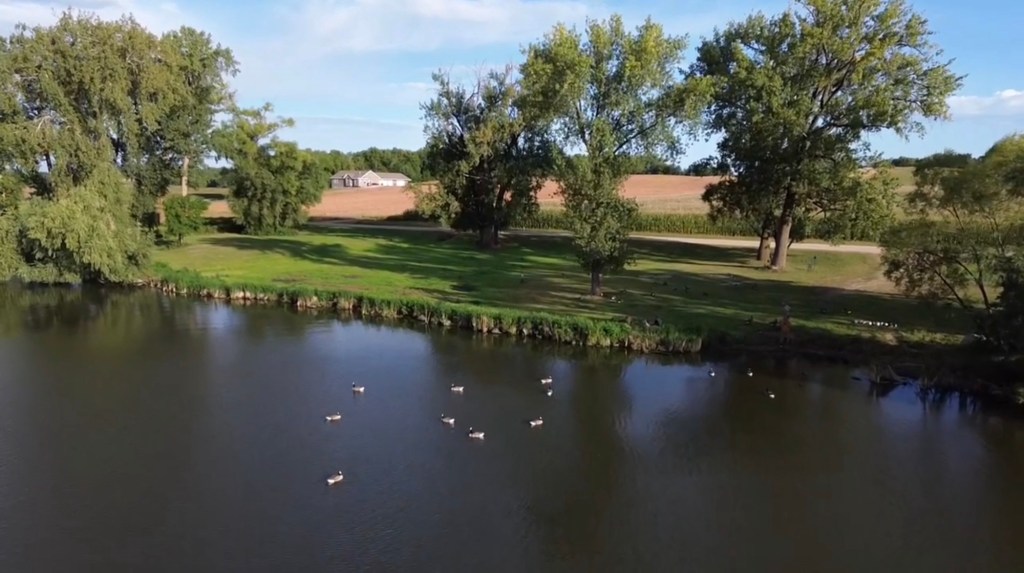
That’s really what this entire idea comes down to.
I’m done thinking about decoy numbers as a requirement.
There isn’t a magical number.
Four isn’t always better than 40.
Forty isn’t always better than four.
The right spread is the one that makes sense for the birds we’re hunting, the place we’re hunting them and what we’re trying to accomplish.
If we’re running traffic in a giant field, give me visibility.
If we’re recreating a tiny loaf exactly where birds already want to be, give me realism.
If we’re hunting pressured birds, give me something they haven’t been staring at all week.
And if we’re walking a mile into some stupid little pothole on a Tuesday morning, I’m definitely not carrying 60 decoys just because they’re sitting in the trailer.
Scout the birds.
Watch how they sit.
Pay attention to their posture.
Find the best hide.
Take the fewest decoys necessary to convincingly recreate what you saw.
Then resist the urge to keep adding things.
Because maybe the next step in becoming better waterfowl hunters isn’t building bigger spreads.
Maybe it’s getting good enough to fool them with less.
– Max & Danielle
Burley Outdoors


Leave a comment