
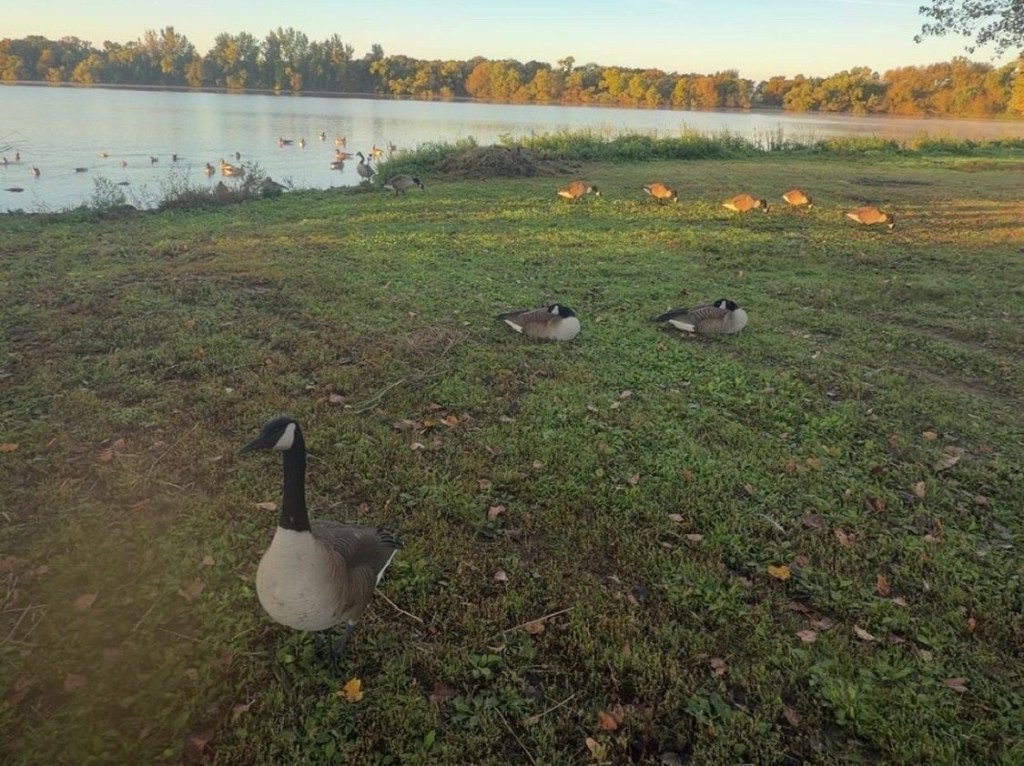
One of the easiest ways to ruin a good waterfowl spot is to have a good hunt there.
That sounds backwards, but anybody who has hunted the same local birds for very long probably knows exactly what I mean.
You scout for a few evenings, finally find a group of ducks or geese doing something predictable, wait for the right conditions, and put together a great hunt. Everything works. The hide disappears. Birds finish. Ember gets retrieves. You leave feeling like you finally cracked the code.
Naturally, the first thought is:
When can we hunt it again?
Lately, I’ve been trying to replace that question with a different one.
What can we do right now to make sure these birds are still huntable the next time?
Because killing birds today and protecting tomorrow’s opportunity aren’t always the same thing.
Early October in southern Minnesota is an interesting time to hunt. We’re still dealing with plenty of birds that have been living around hunters for a while. Some have already survived multiple encounters with decoys, calls, boats, blinds and trucks parked in places trucks normally aren’t parked.
And every time we hunt them, we teach them something.
That has me thinking more about the hunt after the hunt—all the little things we do before, during and after shooting that determine whether the birds we didn’t kill remain huntable.
Every Hunt Leaves a Footprint
We usually think hunting pressure begins with the first shot.
I don’t think that’s true.
Pressure starts when the birds realize something isn’t normal.
Maybe that’s a truck parked on the edge of a field at 5:30 in the morning.
Maybe it’s headlamps moving down a shoreline.
Maybe it’s three guys walking across an open pasture carrying decoys.
Maybe it’s a boat motor running through the middle of a loaf.
Maybe it’s us standing beside the blind after the hunt talking while birds circle overhead.
Birds don’t need to get shot at to learn.
They just need to associate a place with danger.
That’s something Danielle and I have been talking about more because it’s easy to focus so much on the actual setup that we forget everything surrounding it.
We might spend 20 minutes making sure a blind disappears and then park a shiny pickup where every goose in the county can see it.
That’s a pretty bad trade.
Where You Park the Truck Matters
This might be one of the least exciting waterfowl tactics I’ve ever written about.
Park farther away.
Seriously.
If moving the truck another 300 yards keeps it out of sight of approaching birds, I’ll take the walk.
We’ve all been guilty of trying to make setup easier. Back the truck closer. Unload everything. Hide it behind a little rise and convince ourselves nobody can see it.
Then you walk 100 yards away and realize the truck might as well have a flashing neon sign above it.
Geese especially spend an incredible amount of time looking at the ground.
They know what’s normal.
If they’ve been feeding in the same field for several mornings and suddenly there’s a Silverado sitting beside a fence line that wasn’t there yesterday, that’s information.
Will every flock care?
No.
But we’re trying to eliminate variables we can control.
I can’t control whether another hunter shoots down the road.
I can’t control the wind changing.
I can’t control whether a bald eagle decides to cruise through the marsh at the worst possible moment.
I can control where I park.
So why give the birds that clue for free?
The Best Hide Is the One Birds Never Notice
The same philosophy applies to concealment.
We’ve become pretty obsessed with hiding well, and I don’t see that changing anytime soon.
Not because a beautiful blind makes a good Instagram picture.
Because a bad hide educates birds.
Think about the flock that gets to 70 yards, sees something wrong and slides away.
Nobody shoots.
It feels harmless.
But those birds just learned something.
They saw decoys.
They heard calling.
They approached.
Then they identified danger and escaped.
That’s almost worse than never getting their attention.
We’re basically giving them a lesson.
That’s why I’m becoming increasingly willing to sacrifice the “perfect” shooting position for a better hide.
I’d rather finish birds slightly off-center from a blind that completely disappears than force ourselves into the exact landing hole with a suspicious lump behind us.
This is especially important with the smaller, more realistic spreads we’ve been experimenting with.
The entire setup is supposed to communicate calm.
A dozen relaxed geese sitting on a grass edge doesn’t make sense if there’s a giant rectangular hay pile 15 yards behind them that wasn’t there yesterday.
Don’t Shoot Just Because You Can
This one is tougher.
Ethical shot selection obviously matters because we owe it to the birds to make clean kills.
But there’s another side to it.
Every bad volley costs something.
Say five geese are working.
They’re interested but not committed. Eventually they swing across the edge at 45 or 50 yards.
Could somebody kill one?
Probably.
Maybe.
But what happens if three guns go off and nothing falls?
Now five geese leave with an extremely clear understanding of what just happened.
Those birds might be considerably harder the next time we encounter them.
I’d rather watch a flock leave untouched than throw shells at birds that aren’t giving us the shot we want.
That isn’t always easy in the moment.
The adrenaline is going.
You’ve been sitting there for two hours.
They’re the closest birds you’ve had.
Somebody whispers, “Take ’em?”
Sometimes the best answer is no.
Let them go.
Maybe they’ll come back.
Maybe they won’t.
But firing isn’t automatically the right decision just because a bird entered shotgun range.
Let Birds Leave Without Seeing You
This is one of the biggest things I’m trying to improve.
The hunt isn’t over when we unload the guns.
Imagine you’re hunting a pond and shoot a few ducks. Things slow down, so you decide to leave.
You stand up.
Ember runs around.
Everyone starts grabbing decoys.
Two groups of ducks appear in the distance.
At that point, those ducks don’t just see a pond they weren’t ready to use yet.
They see exactly why the pond was dangerous.
Humans.
Dog.
Blind.
Decoys.
Boat.
The whole trick gets exposed.
Sometimes there’s nothing we can do about it. We have jobs, families and places we need to be.
But when possible, I want to think about how we’re exiting a hunt.
Can we wait five minutes and let a nearby flock leave?
Can we keep the dog controlled?
Can we retrieve decoys efficiently instead of spending 30 minutes wandering around the spot?
Can we use terrain or vegetation to disappear on the way out?
If birds are still actively using an area, how we leave matters.
We spend hours trying not to let them see us before shooting time.
Then the hunt ends and suddenly we act like invisibility no longer matters.
It does.
Don’t Turn a Good Spot Into a Daily Spot
This might be the hardest lesson.
Birds are there.
You know they’re there.
Tomorrow’s schedule is open.
Why wouldn’t you hunt them?
Because sometimes leaving birds alone is how you keep birds.
This becomes especially important with loafs and smaller water.
A feeding field might naturally empty after birds finish eating. A loafing pond is different. The entire reason birds are using it might be because they feel safe there.
If we hunt it every morning, eventually it stops being safe.
Then we’re surprised when the birds disappear.
I’m trying to think about our spots almost like accounts.
Every hunt makes a withdrawal.
Weather can make a deposit.
New migration can make a huge deposit.
Several quiet days can rebuild confidence.
But if we’re constantly withdrawing and nothing is replenishing the spot, eventually the account hits zero.
The exact amount of rest a spot needs depends on the situation. There isn’t a magical three-day rule.
Watch the birds.
Watch the pressure.
Watch the weather.
If new birds arrive, everything can change overnight.
But don’t hunt somewhere simply because you technically can.
Stop Calling Birds That Are Already Coming
Calling is another place where we can accidentally educate birds.
I love calling.
Most waterfowl hunters do.
There’s something incredibly satisfying about turning birds with a call.
But sometimes our ego gets involved.
Birds are locked.
They’re coming.
And we’re still calling.
Why?
If the flock is doing exactly what we want, the call has already done its job.
Let them come.
Every additional note gives them another opportunity to identify something that doesn’t match what they’re seeing.
This becomes even more important as local birds hear more hunters.
Eventually they start associating certain sounds with danger.
I’m not suggesting we stop calling.
I’m suggesting we call with a purpose.
Turn them.
Keep them interested.
Correct a flock that’s sliding.
But if they’re committed?
Shut up and hide.
That’s free advice I’m also trying to remind myself of while holding a goose call.
Your Dog Is Part of the Hide
Ember adds another piece to all of this.
I want her involved in every hunt possible because real hunting experience is impossible to completely recreate in training.
But a dog moving around outside the blind can destroy an otherwise perfect setup.
That means steadiness isn’t only a dog-training goal.
It’s a hunting tactic.
A dog that stays concealed while birds work helps us finish birds.
A dog that breaks early can flare them.
A dog that runs around after the hunt can expose the entire setup to birds in the distance.
So when I’m working on steadiness with Ember, I’m not just thinking about having a polished retriever.
I’m thinking about tomorrow’s ducks too.
The better she understands that nothing happens until she’s released, the less chaos we create around birds.
That’s good dog work.
It’s also good waterfowl hunting.
Sometimes the Best Hunt Ends Early
This one goes against almost every instinct I have.
If birds are flying, I want to hunt.
But there are situations where killing a few birds cleanly and leaving might be better than grinding out every possible opportunity.
Maybe we’ve shot enough that birds are starting to avoid the area.
Maybe Ember has gotten several good retrieves and the training objective for the morning is accomplished.
Maybe the wind is changing.
Maybe we’re beginning to lose concealment.
Maybe we’ve already had a great morning.
There’s no rule saying every hunt has to continue until the legal limit or the last minute of shooting time.
Sometimes getting out cleanly protects the spot.
And sometimes that’s worth more than one additional duck.
Hunt Like You Plan on Coming Back
That’s really the entire idea.
Hunt every spot like you might want to hunt it again.
Park accordingly.
Hide accordingly.
Call accordingly.
Choose shots accordingly.
Handle the dog accordingly.
Leave accordingly.
None of those things guarantee birds will return.
They’re wild animals. Migration changes everything. Weather changes everything. Other hunters exist. Farmers work fields. Predators move birds.
There’s a huge part of waterfowl hunting we cannot control.
That’s exactly why the things we can control matter so much.
I can’t make a mallard migrate into Minnesota.
I can make sure my truck isn’t sitting underneath him when he does.
We’re Hunting More Than Today’s Birds
This season I’ve been thinking more about what makes somebody consistently successful at waterfowl hunting.
It’s easy to look at the decoys.
The calls.
The boat.
The shotgun.
The blind.
Those things matter.
But I think some of the biggest differences happen in decisions nobody photographs.
Driving farther to hide the truck.
Passing a questionable shot.
Leaving a productive pond alone for a few days.
Waiting for birds to disappear before picking up.
Moving the blind because the first two flocks didn’t like it.
Putting the call down when the birds are already coming.
Those aren’t glamorous tactics.
They don’t make very exciting gear reviews.
But over an entire season, they add up.
We spend an unbelievable amount of time trying to fool birds.
Maybe we should spend just as much time making sure the birds we don’t fool today aren’t considerably smarter tomorrow.
Because eventually another cold front will come.
New ducks will arrive.
The local geese will settle into different patterns.
And hopefully, some of the birds that beat us today will give us another chance.
When that happens, I don’t want them arriving with a complete education courtesy of Burley Outdoors.
I want them comfortable.
I want them curious.
And most importantly, I want them close.
– Max & Danielle
Burley Outdoors


Leave a comment