
Burley Outdoors | October 27, 2026
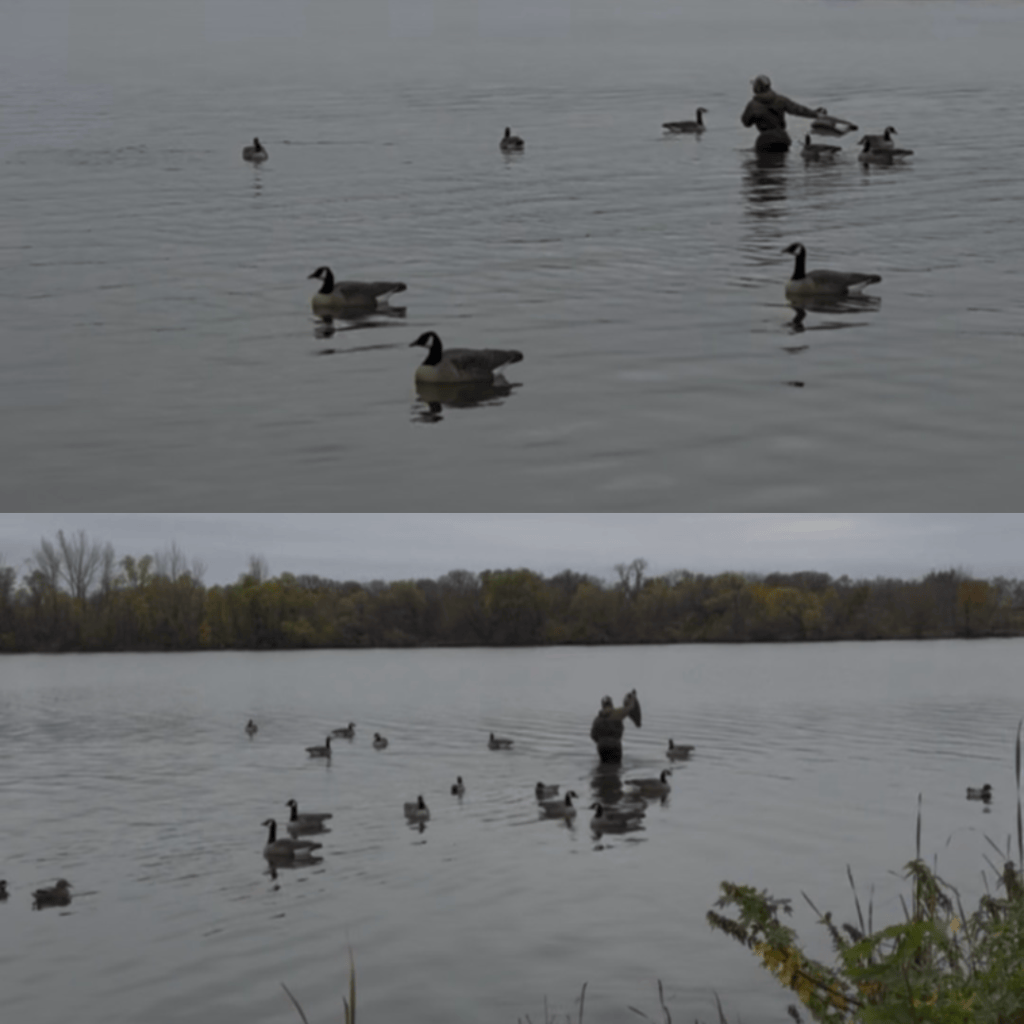
There’s a particular kind of frustration that every waterfowl hunter knows.
You’ve done the scouting. You’ve found the birds. You’ve gotten permission, hauled out the decoys, brushed the blinds, and put together what you believe is a pretty damn good setup.
Then the birds start flying.
And nothing wants to finish.
Maybe the geese are looking at your spread but sliding off before they ever get close. Maybe the ducks are circling three or four times before disappearing over the trees. Or maybe the birds aren’t even giving you a serious look.
Whatever the situation, something isn’t working.
And that’s when things can start getting interesting.
One guy thinks we need to call more. Somebody else wants to move the decoys. Another guy is convinced the birds are just stale and pressured. Before long, everybody has a different theory, and we’re throwing everything we can think of at the problem.
But here’s something I’ve been thinking about a lot this season.
What if we’re trying to fix the wrong thing?
What if the problem isn’t our calling?
What if the decoys aren’t the issue?
What if the birds are telling us exactly what’s wrong, but we’re too busy trying to make them finish to actually pay attention?
Sometimes the smartest adjustment we can make during a hunt isn’t adding something.
It’s taking a few minutes to stop, look around, and figure out what’s actually happening.
Before You Change Anything, Take a Step Back
I think this is where a lot of waterfowl hunts go sideways.
We get so invested in our setup that we stop looking at it objectively.
We’ve spent an hour brushing blinds, so naturally we assume they’re hidden.
We’ve carefully arranged our decoys, so we assume the spread looks good.
We’ve positioned ourselves based on the forecasted wind, so we assume the landing zone makes sense.
But what looked good in the dark at 5:30 in the morning might look completely different once the sun comes up.
And what looked good from inside the blind might look terrible from the direction the birds are approaching.
That’s why, when we’re consistently having birds refuse to finish, I think the first adjustment should be the simplest one.
Get out of the blind and look at the entire setup.
Not just the decoys.
Everything.
Walk away from the hide. Look at it from different directions. Pay attention to where the birds are coming from and what they’re seeing on their approach.
Sometimes the problem becomes painfully obvious.
And sometimes you’ll wonder how the hell you missed it in the first place.
1. Start With the Hide. Always.
If there’s one thing I’ve become increasingly convinced of, it’s that concealment is responsible for more failed waterfowl hunts than most of us want to admit.
We love talking about decoys.
We love talking about calling.
We spend ridiculous amounts of money on equipment designed to attract birds.
But none of that matters if the birds can see us sitting in the middle of the spread.
And the frustrating part is that sometimes our hide looks fantastic to us.
Until we actually step away and look at it.
Does the blind belong in the landscape?
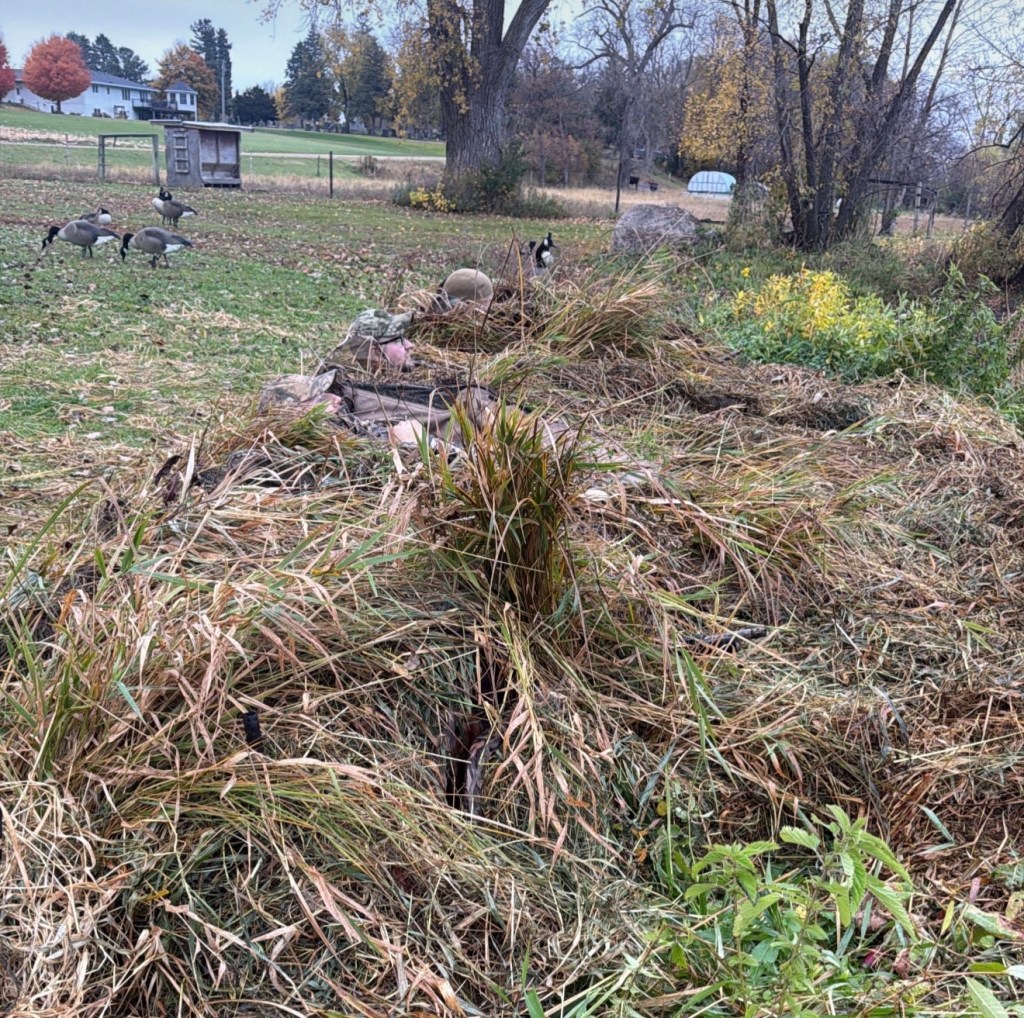
One of the biggest things I look for is whether our hide matches the surrounding environment.
If we’re hunting a harvested beanfield, does our blind actually blend into the bean stubble?
Or does it look like somebody dropped a giant pile of grass in the middle of a perfectly flat field?
If we’re hiding in standing corn, are we naturally tucked into the existing vegetation?
Or have we created a big, unnatural hole that looks completely different from the rest of the corn?
If we’re hunting a marsh, does our blind match the surrounding cattails and reeds?
Or is there a big, dark opening where several hunters are sitting?
It’s not always about how much vegetation we put on the blind.
Sometimes it’s about the shape, color, height, and location of the hide.
A heavily brushed blind can still look completely unnatural.
And a relatively simple hide can disappear if it’s positioned correctly.
Check the little things
This is where I think we can get lazy.
A few things worth checking:
- Are there exposed faces or hands?
- Is somebody wearing a hat that’s noticeably lighter than the surrounding vegetation?
- Are shiny gun barrels or other reflective surfaces catching the sun?
- Is there a big black opening in the top of the blind?
- Are hunters silhouetted against the sky?
- Are bags, cases, or other equipment lying out in the open?
- Are we moving too much when birds get close?
Those things might seem insignificant when we’re standing next to the blind.
But a goose approaching from 100 yards away has a very different perspective.
And ducks circling directly overhead can see things that are completely invisible from ground level.
Don’t forget about pie-facing
This is a big one.
And it’s something that can absolutely ruin an otherwise good setup.
Pie-facing is when hunters are looking straight up at approaching birds, exposing their faces to the sky.
Everybody wants to watch the birds work.
I get it.
That’s half the fun.
But when three or four guys are sitting in a blind with their faces pointed straight toward the sky, those bright ovals can stand out against an otherwise dark or natural background.
Especially when birds are directly overhead.
Sometimes we get so excited watching geese lock up that we forget we’re practically staring them in the face.
The solution isn’t complicated.
Keep your head down.
Let one person track the birds when possible.
Use your eyes rather than lifting your entire head.
And make sure everybody understands that staying concealed matters right up until it’s time to shoot.
You can have the best hide in the county and ruin it with four guys looking straight up.
That’s an adjustment that costs absolutely nothing.
2. Look for Anything That Doesn’t Belong
Once I’m satisfied with the hide itself, I want to look at the entire hunting area.
Because sometimes the problem isn’t the blind.
It’s something else that stands out.
A decoy bag lying behind the spread.
A sled parked in the open.
A trailer or vehicle that’s visible from the air.
An unusual pile of vegetation.
A spinning-wing pole that’s leaning at an odd angle.
Even something as simple as a bright piece of equipment can make an otherwise natural-looking setup feel wrong.
And here’s the important part.
Just because something doesn’t bother us doesn’t mean it won’t bother the birds.
We’ve gotten accustomed to seeing our equipment.
We know that black object near the edge of the field is just a sled.
We know the unusual clump of grass is where we piled our extra brushing material.
We know the shiny object near the water is part of our motion setup.
The birds don’t know any of that.
They’re approaching a location and evaluating whether it looks safe.
Anything that seems out of place could potentially influence their decision.
Look at the setup from their approach
If birds are consistently coming from the west, I want to know exactly what our spread looks like from the west.
Not from behind the blind.
Not from the road.
From the direction the birds are actually approaching.
This is especially important when the sun is low.
Something that blends beautifully when viewed from one direction might stand out dramatically when backlit or illuminated from another.
And if multiple flocks are reacting the same way from the same direction, that’s information worth investigating.
Before moving a single decoy, I’d rather eliminate the obvious things that might be making birds uncomfortable.
3. Are We Actually Set Up for the Wind?
Here’s another one that sounds obvious but can create major problems.
We set up based on the forecast.
The forecast says southwest wind.
We arrange our spread accordingly.
Then the sun comes up, the wind shifts, and suddenly birds are approaching from a completely different angle.
Now our landing hole isn’t where we intended.
The birds are swinging behind the blind.
Or they’re trying to finish in a location that puts them directly over the hunters.
And instead of recognizing the wind has changed, we start blaming the decoys.
That’s why I think we need to keep evaluating the conditions throughout the hunt.
Especially on mornings with light or variable winds.
Watch what the birds are trying to do
Ducks and geese often prefer to land into the wind, but their actual approach can be influenced by terrain, cover, obstacles, and other factors.
If every flock is trying to finish on the wrong side of the spread, that should tell us something.
Maybe the wind has shifted.
Maybe the landing hole is poorly positioned.
Maybe the birds have a preferred approach based on the surrounding landscape.
Whatever the reason, we need to be willing to adjust.
Sometimes moving the entire spread isn’t necessary.
We might simply need to shift the landing pocket.
Move a few decoys.
Open up a different section.
Or reposition the hunters if the location allows it safely and legally.
The goal isn’t to force birds to follow the pattern we created in the dark.
It’s to recognize how they’re actually approaching and make the setup work with that behavior.
4. Now Let’s Talk About the Decoys
This is where most of us want to start.
And I understand why.
Decoys are easy to blame because they’re something we can physically change.
But I think they should come after we’ve evaluated the hide, surrounding equipment, and wind.
Because if the birds are seeing our faces, moving another dozen decoys probably isn’t going to solve anything.
Once we’re confident the obvious problems are addressed, then it’s time to evaluate the spread.
And there are a lot of adjustments worth considering.
Change the landing hole
This would probably be my first decoy adjustment.
If birds are showing interest but consistently sliding away before finishing, I want to know whether we’re giving them a comfortable place to land.
Is the opening too small?
Are we crowding it with decoys?
Are birds trying to land somewhere different from where we expected?
Sometimes moving just a handful of decoys can create a much more inviting landing area.
And if birds are repeatedly trying to finish outside shooting range, we may need to shift the pocket closer to the hunters.
Not by forcing them into an unnatural-looking opening, but by arranging the spread so their preferred approach brings them within comfortable range.
Open the spread up
Another thing worth trying is increasing the spacing between decoys.
It’s easy to set decoys too tightly, especially when we’re trying to keep everything close to the hide.
But real birds don’t always sit shoulder to shoulder.
Feeding geese spread out.
Ducks move around.
Small groups naturally create gaps.
If our spread looks like one giant pile of decoys, opening things up might create a more believable picture.
This is particularly interesting when we’re dealing with pressured birds that have already seen plenty of conventional setups.
Sometimes a less structured spread looks more natural.
Tighten the spread down
And yes, sometimes the exact opposite adjustment is worth trying.
If we’re hunting colder conditions, birds may naturally be grouping more tightly in certain situations.
Or maybe we’re trying to create the appearance of a small concentration of birds feeding on a particularly attractive area.
A tighter spread can also help create a more defined landing pocket.
The important thing is understanding why we’re making the adjustment.
Not simply changing things for the sake of changing them.
Change the number of decoys
This is one of the most interesting decisions we can make.
If birds aren’t finishing, should we add more decoys?
Or take some away?
I think both can work.
But it depends on what we’re seeing.
If birds are traveling past without noticing our setup, a larger spread might improve visibility and pulling power.
If birds are noticing the spread but acting suspicious once they get closer, reducing the number of decoys might create a more natural-looking situation.
We’ve had a lot of success with our Dave Smith Decoys this season, and one of the things I really appreciate about our collection is the ability to build different types of spreads.
We can create a large group of feeding geese.
Or we can scale things back and put together a smaller, realistic setup.
Neither approach is automatically correct.
And I think it’s important to remember that.
More decoys don’t always mean more committed birds.
Sometimes less really is more.
Change the body postures
This is something I think deserves more attention.
Especially when hunting geese.
Are we creating a believable picture with our decoys?
If we’re trying to imitate a relaxed feeding flock, does the spread actually look relaxed?
Are there appropriate numbers of feeders, resters, and upright birds?
Does the arrangement make sense for the time of day and the location?
With our DSD spread, we’ve got the ability to mix different body postures and create something that looks much more natural than a bunch of identical decoys.
But that doesn’t mean we should automatically put every posture we own into every spread.
Sometimes the birds might respond better to a feeding-heavy setup.
Other times, a more relaxed group with resters and sleepers could make sense.
I don’t believe there’s a magic ratio.
But I do believe the overall appearance should tell a believable story.
And if birds aren’t buying that story, changing the posture mix is another option worth exploring.
5. Motion Decoys: Turn Them Up, Turn Them Down, or Turn Them Off
Motion is another area where we can experiment.
Especially when duck hunting.
A spinning-wing decoy can be fantastic for attracting birds from a distance.
We’ve spent plenty of time experimenting with elevated spinners in our backwater setups because sometimes the surrounding vegetation makes it difficult for ducks to see the floating decoys.
Getting that flash above the reeds can make a huge difference in visibility.
But attracting birds and finishing them aren’t always the same thing.
If ducks are consistently turning toward our spread and then flaring as they approach, I want to consider whether the motion is contributing to the problem.
Maybe the spinner is too close to the landing hole.
Maybe the flashing is too aggressive in the conditions.
Maybe birds would be more comfortable if we shut it off once they’re committed.
Or maybe the spread needs more natural water movement rather than more wing flash.
Experiment with different combinations
Depending on the equipment available, we can try:
- Running spinning-wing decoys continuously.
- Turning spinners off when birds begin working.
- Moving spinners farther from the landing pocket.
- Reducing the number of active spinners.
- Adding subtle water movement with a jerk rig or swimmer.
- Turning everything off and seeing how birds respond.
I think that last option is one we overlook.
Sometimes we’re so convinced that motion is necessary that we never test what happens without it.
And if birds are already interested in our location, removing an unnatural element might be exactly what they need.
Again, there’s no universal answer.
But there are plenty of adjustments worth trying.
6. Calling: More, Less, Different, or Nothing at All
Now we’re getting into an area that can create some pretty entertaining disagreements in the blind.
Calling.
Everybody has an opinion.
Some hunters believe you need to stay aggressive and keep birds interested.
Others prefer softer, more natural calling.
And some swear that pressured birds respond best when you barely make a sound.
The funny thing?
Depending on the situation, all three approaches can work.
We’ve experienced hunts where aggressive calling seems to turn birds that otherwise wouldn’t have given us a second look.
And we’ve had other days where nothing we do seems to matter.
Three guys calling hard.
One guy calling.
Soft clucks.
Little finesse sequences.
Complete silence.
Sometimes the birds just don’t care.
And that’s an important lesson.
Calling isn’t a magic button that makes birds finish.
It’s one tool in a much larger system.
Option one: Get aggressive
If birds are traveling past the spread without showing much interest, more aggressive calling might be worth trying.
The goal is to get their attention.
Give them a reason to look.
Make them curious enough to investigate.
This can be especially useful when birds are moving at a distance and haven’t noticed the decoys.
But once they turn, we need to pay attention to their response.
If aggressive calling gets their attention but they consistently slide away once they approach, we might need to change our approach.
Option two: Back off and finesse them
Sometimes birds are already interested.
They’re circling.
They’re looking.
They’re clearly considering the spread.
In those situations, I often wonder whether we’re doing more harm than good by continuing to call aggressively.
Maybe all they need is a few soft clucks.
A little feeding chatter.
Some subtle, natural sounds that suggest birds are comfortable on the ground or water.
The goal isn’t to overwhelm them.
It’s to maintain interest without drawing unnecessary attention toward the hide.
And depending on the flock, that might be all it takes.
Option three: Shut up completely
This might be my favorite experiment.
Because it challenges our instinct to always do something.
If birds are already working, what happens when we stop calling entirely?
Do they continue circling?
Do they become more comfortable?
Do they finish without any additional encouragement?
Or do they lose interest?
We won’t know unless we try.
And if we’re hunting birds that have been pressured heavily, silence might help make our setup feel different from the countless other spreads they’ve encountered.
Not because every pressured goose is afraid of calling.
But because we’re removing another potential source of suspicion.
Option four: Change the callers
Here’s another adjustment we don’t always consider.
Sometimes the issue isn’t how much calling we’re doing.
It’s the sound itself.
Different callers have different tones, rhythms, and styles.
Maybe one caller is producing a sound the birds respond to better.
Maybe several people calling simultaneously are creating too much noise.
Or maybe the timing between callers isn’t particularly natural.
Try having one person handle the calling.
Then try a different caller.
Or have the group coordinate rather than everybody calling independently.
It’s a simple experiment.
And it doesn’t require moving a single decoy.
7. Look at the Sun, Shadows, and Visibility
Here’s something that can change dramatically throughout a hunt.
Lighting.
A hide that looks excellent before sunrise might become much more obvious once the sun clears the horizon.
Shadows shift.
Faces become illuminated.
Decoys look different.
Water glare changes.
And birds approaching from different directions may suddenly have a much clearer view of the hunters.
That’s why I think we should reevaluate concealment as the morning progresses.
Especially when birds begin reacting differently after sunrise.
Maybe the sun is now shining directly into the blind.
Maybe a reflective surface is catching light.
Maybe our shadows are stretching across an otherwise open field.
Or maybe the birds can now see something that was hidden in the early morning darkness.
Sometimes the adjustment is as simple as adding more cover to one side of the hide.
Other times, we might need to change how we’re positioned.
And sometimes the lighting is actually helping us.
The point is to recognize that our setup isn’t static.
Conditions change.
And we need to respond accordingly.
8. Are We Hunting the Wrong Spot?
This is the adjustment nobody wants to talk about.
Because it’s the most inconvenient.
What if the birds simply don’t want to be where we’re hunting?
We’ve all had those mornings.
Birds are flying.
They’re active.
They’re feeding.
But they’re consistently going somewhere else.
Maybe they’re landing 150 yards away.
Maybe they’re using the opposite end of the field.
Maybe they’re cutting into a different section of the marsh.
And no matter what we do, we can’t convince them to change their minds.
At some point, we have to consider whether the problem is our location.
Not our equipment.
Not our calling.
Not our decoys.
Our location.
Sometimes moving is the answer
If birds are consistently showing us a preferred location, and we can legally and safely move there without creating a worse concealment problem, it might be worth relocating.
That doesn’t always mean picking everything up and moving a quarter mile.
Sometimes a 30-yard adjustment can completely change the hunt.
Moving to a different corner of the field.
Shifting along the edge of a marsh.
Changing the location of the landing pocket.
Or moving the hide to better match the birds’ natural approach.
But we need to be realistic.
If the birds are landing in the middle of a completely bare field and the only available cover is 200 yards away, moving closer might create more problems than it solves.
Sometimes the birds have the advantage.
And there’s nothing wrong with admitting that.
9. Don’t Overlook the Human Factor
This might be the least exciting adjustment on the list.
But it matters.
Sometimes the biggest problem in the spread is us.
We’re moving too much.
We’re talking too loudly when birds are close.
We’re standing up too early.
We’re reaching for guns before the birds are committed.
Or we’re so focused on watching the birds that we forget about staying concealed.
And the more frustrated we become, the worse those habits can get.
Everybody starts trying harder.
More calling.
More movement.
More looking.
More discussion about what the birds are doing.
And suddenly the blind becomes a lot more noticeable.
Sometimes the best adjustment is simply getting everybody on the same page.
One person tracks the birds.
Everybody else stays concealed.
Calling is coordinated.
Nobody moves until it’s time.
And we trust the setup enough to let the birds make their decision.
That might not sound exciting.
But it can make a tremendous difference.
10. Change One Thing at a Time
This is probably the most important lesson in the entire discussion.
When birds aren’t committing, it’s tempting to change everything.
Move the decoys.
Change the calling.
Shut off the spinners.
Add more brushing.
Shift the landing hole.
And then when the next flock finishes, we celebrate because we fixed the problem.
But what actually worked?
We have no idea.
Because we changed six things at once.
That’s why I think we should approach adjustments more intentionally.
If the hide has an obvious problem, fix it.
If the wind has shifted, adjust for it.
If birds are consistently avoiding the landing hole, change the opening.
But once we’ve addressed the glaring issues, try to make smaller, individual changes whenever possible.
Then watch what happens.
Did the birds respond differently?
Did they approach from a better angle?
Did they get closer before losing interest?
Did they finally commit?
Or did absolutely nothing change?
Every response gives us information.
And that information becomes valuable on future hunts.
The goal isn’t just to make today’s birds finish. It’s to understand why they weren’t finishing in the first place.
That’s how we become better hunters.
When Nothing Works, Sometimes Nothing Works
Here’s the reality that we all need to accept.
There are going to be days when the birds simply don’t cooperate.
We can have excellent concealment.
A realistic spread.
The perfect wind.
Good calling.
A comfortable landing hole.
And birds might still refuse to finish.
Maybe they’re pressured.
Maybe they’re committed to another location.
Maybe they’re simply not interested in landing.
We don’t always get to know why.
And I think that’s important.
Because there’s a difference between learning from a difficult hunt and driving ourselves crazy trying to explain every flock.
Sometimes the birds are telling us something useful.
Other times, they’re just being birds.
We need to recognize the difference.
If multiple flocks are reacting the same way, there’s probably something worth investigating.
If one flock acts strange and the next group finishes perfectly, maybe the setup was fine all along.
Don’t let one stubborn group convince you to rebuild an otherwise good hunt.
And don’t let frustration push you into taking marginal shots just because the birds won’t finish.
We’ve always preferred to decoy our birds rather than stretch the limits of our shooting.
Especially when we’re hunting difficult water or heavy vegetation where recovering wounded birds can become a challenge.
Ember has been doing an incredible job retrieving this season, but that doesn’t mean we should make her job unnecessarily difficult.
Clean opportunities and responsible recovery still matter more than forcing a shot.
Our Mid-Hunt Adjustment Checklist
When birds are consistently refusing to commit, here’s the order I’d like to work through before getting carried away with changes.
First, look at the obvious problems.
Get away from the blind and look back at the setup. Check concealment, exposed faces, movement, equipment, and anything that doesn’t belong.
Second, evaluate the birds’ approach.
Where are they coming from? Where are they trying to land? Are they consistently reacting at the same distance or location?
Third, check the conditions.
Has the wind shifted? Has the lighting changed? Are the birds approaching from an angle we didn’t anticipate?
Fourth, evaluate the decoys.
Is the landing hole comfortable? Does the spread look natural? Should we open it up, tighten it down, add decoys, remove decoys, or change the body postures?
Fifth, experiment with motion.
Try turning spinners off, changing their location, reducing motion, or adding subtle water movement.
Sixth, change the calling.
Get aggressive. Back off. Use one caller. Try a different style. Or stop calling entirely.
Finally, be willing to move or walk away.
If birds are consistently telling us they want to be somewhere else, we need to decide whether we can realistically adjust our location.
And if we can’t, that’s okay.
Not every hunt is going to work.
The Best Adjustment Might Be Admitting We Got Something Wrong
I think one of the biggest differences between becoming a better waterfowl hunter and simply hunting more often is how we respond when things don’t go according to plan.
It’s easy to blame the birds.
They’re pressured.
They’re stale.
They’re educated.
They’re not migrating.
They’re just being stubborn.
And sometimes those explanations are completely legitimate.
But I don’t want to use them as an excuse to stop evaluating our own decisions.
Because the truth is, we’re going to make mistakes.
We’re going to set up with the wind wrong.
We’re going to miss something obvious in the hide.
We’re going to put decoys in the wrong place.
We’re going to call too much.
Or too little.
We’re going to make decisions that seemed perfectly reasonable in the dark and look ridiculous once the birds start flying.
That’s part of hunting.
The important thing is recognizing those mistakes and learning from them.
And I think that’s where some of the most valuable lessons happen.
Not on the mornings when every flock locks up and falls into the decoys.
But on the mornings when nothing wants to cooperate, and we’re forced to figure out why.
Because sometimes the difference between an empty morning and a great hunt isn’t a new piece of equipment.
It’s moving six decoys.
Shutting off a spinner.
Changing the calling.
Brushing one exposed corner of the blind.
Or telling everybody to quit pie-facing the damn birds. 😂
Little things.
Things we can control.
Things we can actually improve.
And those are the details I want to keep paying attention to as we work through the rest of this waterfowl season.
Before you blame the birds, take a step back and look at your setup.
You might be surprised how often the answer has been sitting right in front of you the entire time.
– Max & Danielle
Burley Outdoors


Leave a Reply